Estepona Property Insights & Area Guide
Everything you need to know about Estepona before you buy: which areas suit which buyers, what the market is doing, what it costs, and what living here is actually like out of season. If you already know the area, you can go straight to property for sale in Estepona.
Quick links
- Introduction to the Estepona Area
- Estepona’s Big Green “facelift”
- New Villas for Sale in Estepona
- Landscape, Weather & Beaches
- Property for sale in Estepona old town
- Estepona Property Market Insights
- Points of Interest & Things to Do in Estepona
- Mediterranean Diet and International Cuisine
- Fiestas and Local Events
- Estepona’s Historical Heritage
- Estepona Areas
- Estepona FAQs
Introduction to Estepona
Estepona is a town of just under 80,000 registered residents, wedged between the Sierra Bermeja mountains and 23 kilometres of coastline. The real figure is higher: local estimates put the year-round population closer to 112,000, and in summer it can reach 160,000. It’s added more than 10,000 residents in the past five years, one of the fastest growth rates in Málaga province. Big enough to have a hospital, international schools and a proper commercial centre; small enough that the old town still works like a Spanish town rather than a tourist set.
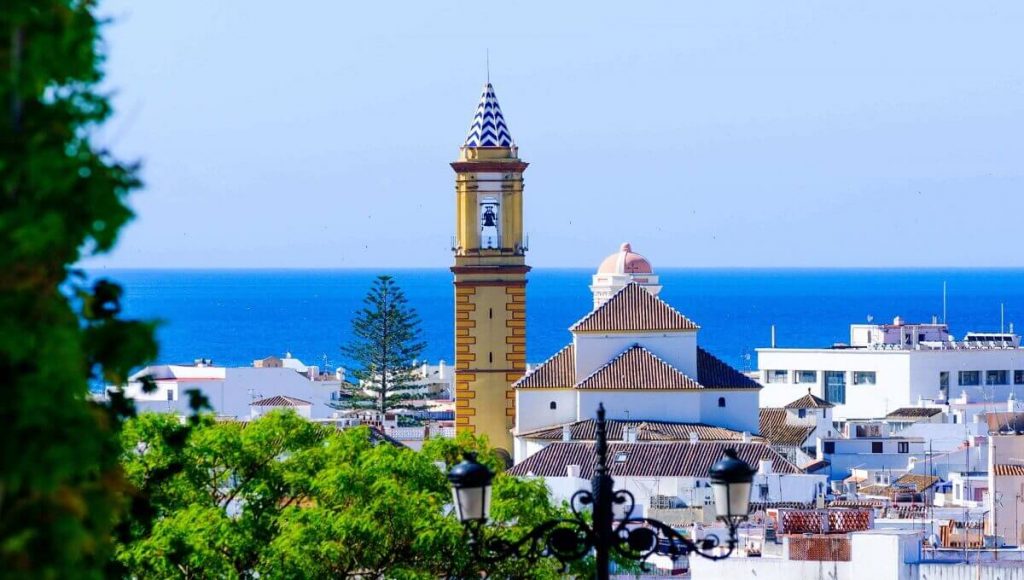
That balance is the whole appeal. Estepona has had a decade of heavy construction and plenty of foreign money arriving, and it hasn’t lost its shape the way some of its neighbours have. The old town is still where people do their shopping. The promenade fills up with locals on a Sunday, not just visitors in August.
It also sits well. Marbella and Benahavís are twenty minutes away, Gibraltar around forty, Málaga airport about fifty by the AP-7. Close enough to everything, far enough to be cheaper than Marbella for the same square metres, though that gap has narrowed considerably along the eastern strip. If you’re weighing Estepona up against other spots on the coast, this one on second homes covers the comparison.
For buyers, the useful thing to know upfront is that Estepona isn’t one market. The old town, the golf belt around El Paraíso and Cancelada, the New Golden Mile and the hills behind Selwo are four different propositions at four different price points. Working out which one you’re actually after saves a great deal of time later.
Explore Estepona through our Video Tour
Estepona’s Big Green “facelift”
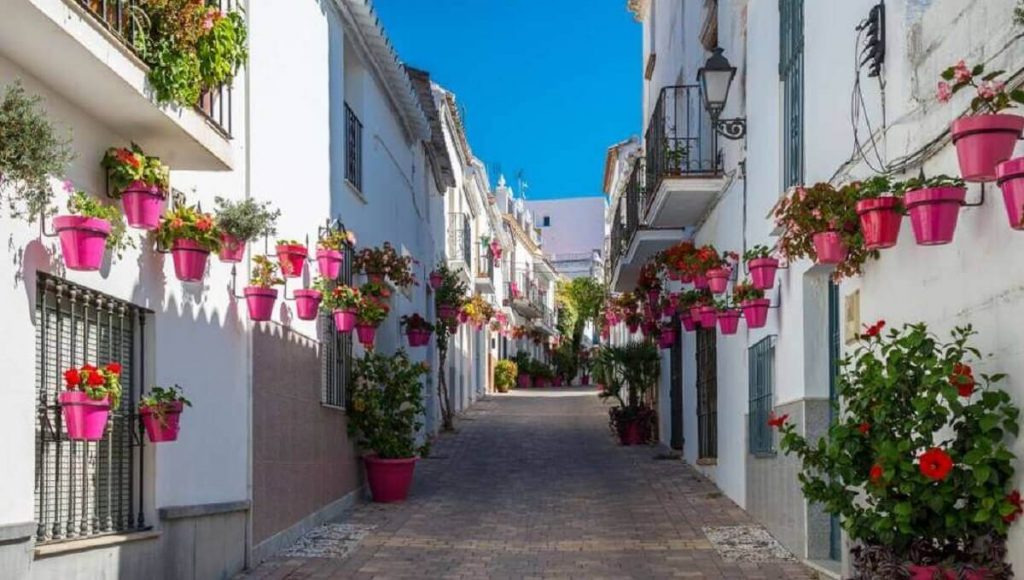
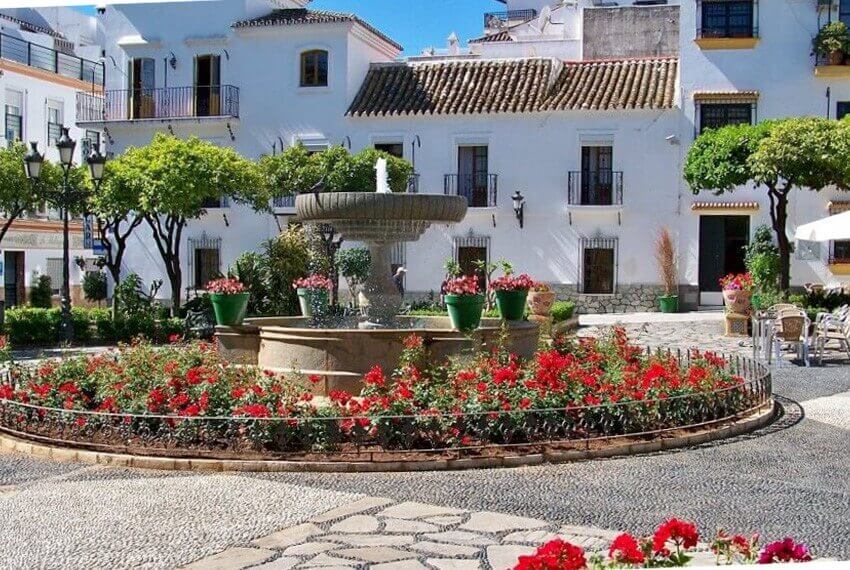
The first thing most people notice walking through central Estepona is the planting. Over the past few years the town has remodelled more than 120 streets and squares, filled them with flowers and trees, and pedestrianised around 17 kilometres of the centre. The council calls it the Garden of the Costa del Sol, and in this case the slogan is if anything underselling it. If you want to see what that actually looks like street by street, I wrote about it in Estepona: a city of flowers, art and poetry.
It wasn’t just cosmetic either. The same programme replaced drainage, cabling and paving across the old town, which is the kind of work nobody photographs but everyone benefits from.
The seafront promenade is now fully pedestrianised from end to end. No traffic at any point, which changes how the whole seafront feels: you can walk it with children or a pushchair without thinking about cars. It’s genuinely one of the best promenades in the country, and it came from turning the old N-340 into public space.
Work is now under way on the Bulevar Parque Central, which is the piece that ties the whole transformation together. It runs along the San Lorenzo and España avenues, linking the new town hall, the seafront and the historic centre, and turns some 22,000 square metres into public space: squares, gardens, walkways and water features, with parking for more than 300 cars underneath. Pedestrian access along San Lorenzo has already opened and the rest is being delivered in phases.
Right on the promenade you’ll find the Mirador del Carmen, easily the biggest cultural addition the town has made in years. It’s a municipal exhibition space that punches well above what you’d expect from a town this size: it has hosted the Carmen Thyssen collection, Goya’s Disasters of War from the MAPFRE collections, the Zuloaga collection and a survey running from Fortuny to Tàpies, with two major exhibitions a year. The same building houses the Biblioteca de Culturas Contemporáneas. If you’re wondering what there is to do here in February, this is a large part of the answer.
And then there’s the parking, which is the sort of detail nobody puts in a brochure and everybody appreciates. The town runs a network of municipal car parks at one euro a day. Not per hour, per day. In a town centre this walkable, that changes how you use it: you leave the car and forget about it.
All of it adds up to a centre that’s genuinely lovely to spend time in, and a promenade running out to the marina with restaurants, play areas and bars along the way. The marina end gets busy in summer, everything from flamenco to late-night bars, while the old town stays quieter. That marina, incidentally, is one of the reasons buying near a marina tends to hold up well here.
If you’re looking at property near the centre, this matters more than it might sound. The regeneration is a big part of why the old town and the streets around it have held their value better than most of the surrounding area. It’s also why Estepona keeps coming up when people ask about the best places for a second home on the Costa del Sol.
Buying in and around Estepona Old Town
New build in the historic centre barely exists. The old town is what it is: narrow streets, low buildings, nothing left to knock down. What comes up for sale there is almost all resale, and the good ones tend to go within weeks of appearing.
That’s not a reason to give up on the area, though. It’s a reason to widen the search slightly.
Prices in the centre run a little above other parts of Estepona, which is what you’d expect given the location and the regeneration work. But they’re still reasonable compared with most of the Costa del Sol, and the streets between the historic core and the Recinto Ferial offer noticeably better value while keeping you walking distance from everything.
If you’re set on the old town itself, there’s more choice than people assume. Townhouses and apartments come up across the range, from small one-bedroom flats to properties with private pools and gardens. As a rule, the closer to the beach, the higher the price.
And if you’d rather have something new without giving up the location, there are developments going up in and around the centre. You get modern build quality and current specifications without taking on a renovation, which for a lot of buyers is the deciding factor. It’s the same reasoning behind buying a newly built property on the Costa del Sol more generally.
Four developments worth looking at, working outwards from the centre:
- Paraíso de Azahar, in the old town itself
- The Privilege, on Avenida Juan Carlos I, just steps from where the new boulevard is being built
- Zenith, by the Olympic stadium
- Anna, also in the stadium area
The four cover the trade-off pretty well: Paraíso de Azahar puts you in the historic centre, The Privilege sits on the axis that’s being transformed right now, and Zenith and Anna give you more for your money a few minutes further out while still leaving you able to walk into town.
Whatever your budget, the centre of Estepona is worth a look. You can walk everywhere, the old town has genuine character rather than a restored version of it, and the sports and leisure side is well covered.
Luxury Villas for Sale in Estepona

Luxury Semi-Detached Villa for Sale in Serene Atalaya Estepona
Semi-detached villa for sale in Serene Atalaya Estepona, Phase 3.…
New Build
908.600€

Villas Monte Palatino in Estepona
Discover Villas Monte Palatino - Valle Romano Estepona 3 beds…
Off Plan
1.590.000€

Monte Palatino Villas – Valle Romano Estepona
Monte Palatino Villas for sale in Valle Romano Estepona 3…
Off Plan
1.650.000€

Villa Monte Palatino – Valle Romano
Villa Monte Palatino in Valle Romano Estepona 3 beds +…
Off Plan
1.730.000€
Weather, Beaches & Landscape
The climate is a large part of why people end up here. Mild winters that rarely drop below 10°C, warm summers from May through September, and somewhere north of 300 days of sunshine a year. The annual average sits around 17°C.
What that means in practice is that the outdoor season isn’t really a season. You can eat outside in January, and the promenade is busy on a Sunday in February.
The Beaches
Estepona has seventeen beaches along more than twenty kilometres of coast, and they’re genuinely different from one another, which is worth knowing before you pick a neighbourhood. If being able to walk to the sand is the priority, it’s worth reading about what frontline beach property actually involves before you start viewing.
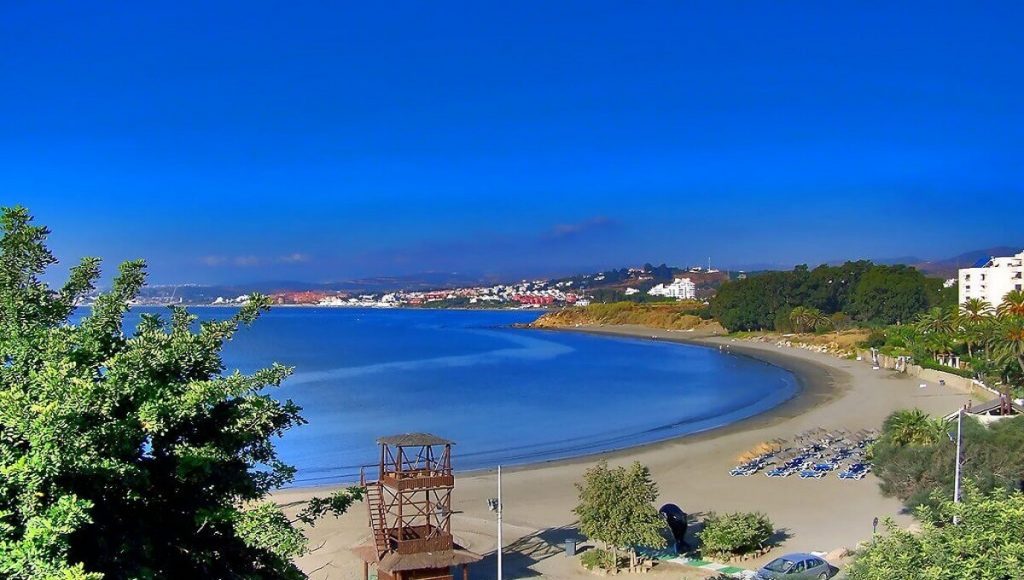
La Rada is the main one: long, wide, right along the promenade, Blue Flag, with chiringuitos spaced out along it. It’s the beach you’d walk to from the old town.
Playa del Cristo is the one families come back to. A sheltered horseshoe bay just west of town next to the marina, with soft sand, shallow water and two beach bars. The shape keeps the wind out and the water warm, which makes it the easiest beach on this coast with small children.
Playa del Padrón, six kilometres east, is where you go for a day out rather than a swim. It’s home to Laguna Village, which makes most lists of the best beach clubs on the Costa del Sol, with food, cocktails brought to your lounger and a spa.
La Galera is a two-kilometre stretch that never gets as busy as the others. Good for water sports, fishing and snorkelling, with sunbeds to rent in summer.
Saladillo, east of town, is long, narrow and quiet. Full facilities, chiringuitos, a playground, and the sort of beach you walk along in the evening rather than spend the day on.
Costa Natura, three kilometres west, was Spain’s first official naturist resort and remains a naturist beach. Volcanic sand and shingle, tucked between Guadalobón and Arroyo Vaquero, and quiet even in August.
Sierra Bermeja
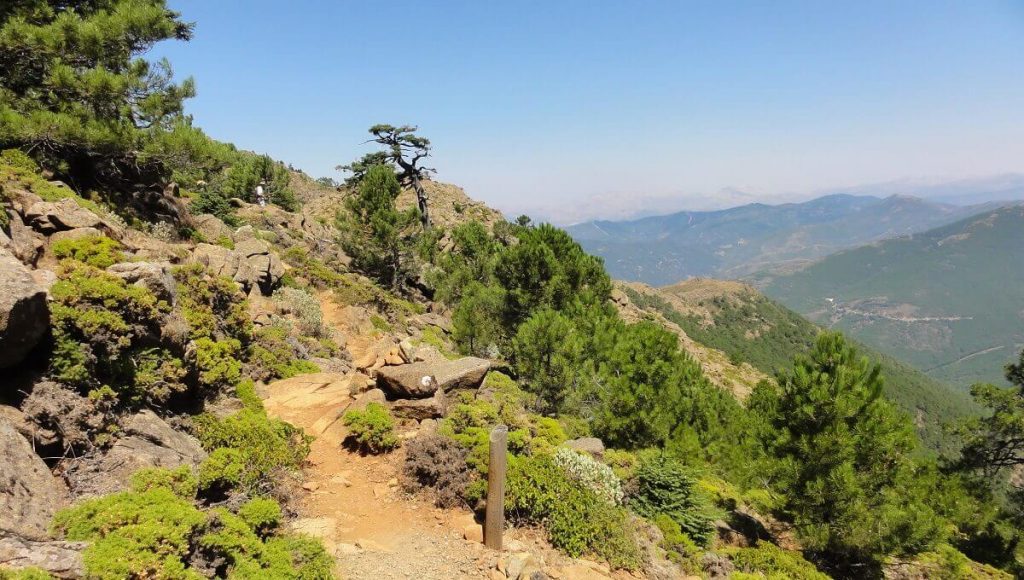
Inland the ground rises fast into the Sierra Bermeja, which is part of the Serranía de Ronda and geologically unusual: the reddish peridotite rock that gives the range its name barely surfaces anywhere else on earth.
It’s laced with hiking and mountain biking trails through chestnut, pine and evergreen forest, and it’s home to the pinsapo, a Spanish fir that survives in only a handful of places. At the top, Pico de los Reales sits at just over 1,450 metres, with picnic facilities and a view that runs down the coast to Gibraltar and across the Mediterranean to Morocco on a clear day. If hiking isn’t enough, there’s plenty more on offer nearby: see the top extreme sports in Andalucía.
For buyers, the Sierra matters for two reasons beyond the walking. It’s protected, which limits what can be built on the upper slopes and keeps the backdrop as it is. And the properties in the foothills, around Selwo and Los Reales, trade proximity for views and plot size in a way you won’t find closer to the sea.
Estepona Property Market Insights
For years Estepona was the sensible alternative to Marbella. Cheaper, quieter, a bit further along the coast. That’s not really true anymore. People come here on purpose now, and the strip running east towards Marbella competes head-on with anything its neighbour has to offer. If you’re weighing it up against the rest of the coast, this one on second homes sets out the comparison.
What makes Estepona unusual is how much ground it covers. You can buy a small apartment inland or a frontline villa on the New Golden Mile in the same municipality. Nowhere else on this stretch of coast gives you that range, which is why so many searches that start somewhere else end up here.
The flip side is that Estepona is hard to compare with itself. Two developments at the same price can mean completely different lives depending on whether you’re ten minutes from the sand on foot or ten minutes by car. The golf belt around El Paraíso and Cancelada feels nothing like the old town, and the hills behind Selwo feel like neither. Location matters more here than finishes or square metres, and it’s the one thing you really have to go and see for yourself.
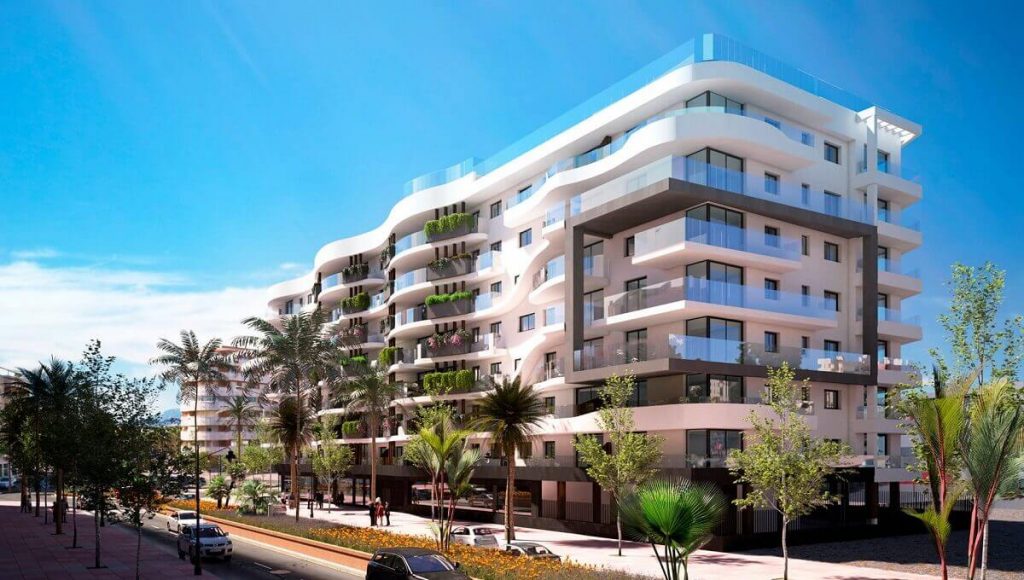
Most of what’s coming to the market is new build, which is a large part of why buyers end up here rather than in an older resort further along the coast. There’s a case for buying new rather than resale generally, and it’s stronger in Estepona than most places simply because there’s so much of it to choose from. Building licences keep moving and there’s still land to develop across the municipality, so you’re not stuck picking between three things in a hurry. That’s not the case everywhere on this coast.
And Estepona doesn’t close in October. The old town, the promenade, the shops, they carry on through the winter, which is why the long-term rental market works here as well as the holiday one. More buyers are moving over for good or spending half the year, and you notice it in what they ask about first: schools, doctors, whether you can walk to a supermarket. Sea views have stopped being the opening question.
That shift shows up in what sells, too. The two segments doing most of the work right now are property you can walk from, whether that’s frontline beach or a few streets back from the old town, and golf-side apartments in the El Paraíso and Cancelada belt, where the appeal is as much the services and the schools as the golf itself.
A positive indicator for the Costa del Sol real estate market is that local town halls have made progress clearing their backlog of building licenses which has stimulated the construction of several new developments. There’s a strong demand for modern-designed new residential housing in Estepona that can be filled at a faster pace now that the town’s administration has cleared the way for building licenses to be obtained more quickly.
New Apartments for Sale in Estepona


Almina Estepona – Exclusive Penthouses for sale
Welcome to Almina Estepona: Gated community within walking distance to…
Off Plan
1.227.450€
Things to Do
There’s more going on in Estepona than the beach, which matters if you’re thinking about being here in November as much as in July.
The obvious starting point is the Clock Tower in Plaza del Reloj, sitting between the town hall, San Luis Castle and the Church of the Remedies. Nearby, the old bullring houses the municipal museums. And the Orchidarium has become one of the town’s signature attractions: three glass domes and more than 5,000 plant species, which is a genuinely unusual thing to find in a town this size.
Then there’s the Route of Artistic Murals, more than 40 large-scale paintings using building facades as canvases. It’s a good hour’s walk and it takes you through parts of town you wouldn’t otherwise see.

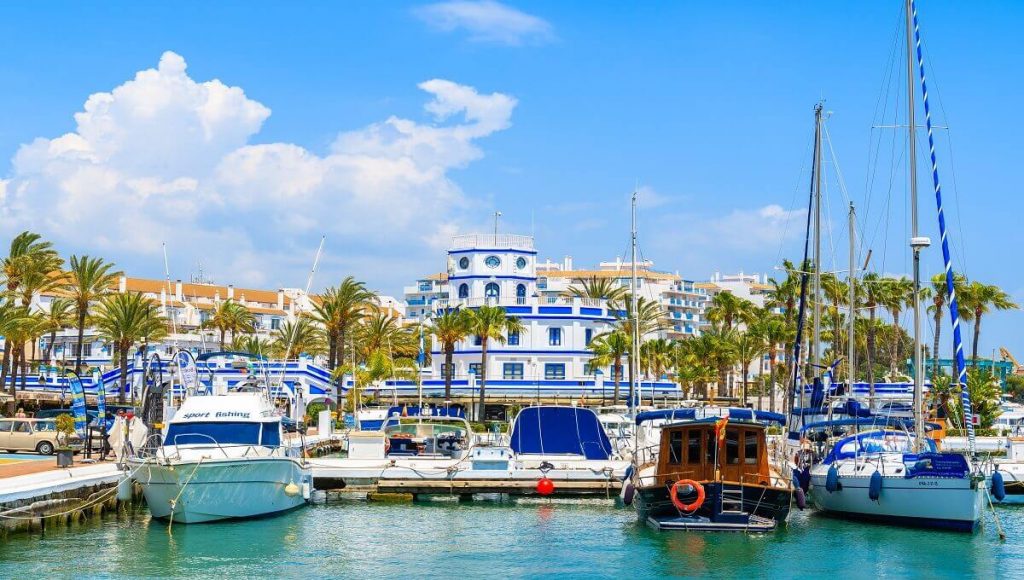
The marina, at the western end of the promenade, has over 440 berths and a decent spread of restaurants and bars. Sailing, jet-skiing and kayaking all operate from there, and the atmosphere is relaxed rather than showy.
On the golf side, Estepona holds its own. El Paraíso, designed by Gary Player, and Valle Romano are the best known, but the real advantage is the spread: there’s something here whether you play off single figures or you’re picking up a club for the first time. If golf is driving your search, it’s worth reading about what living by a golf course is actually like day to day, and about buying an apartment near a golf course specifically.
Selwo Aventura is the big family day out: a wildlife park across four zones with around 2,000 animals from more than 200 species, plus a zip line over a lake, a suspension bridge and a 4×4 safari.
And the Costa del Sol School of Equestrian Art is one of the most respected equestrian centres in Spain, with some of the best facilities in Europe. They run riding classes at every level, horse care classes, family pony rides and children’s birthdays.
Mediterranean Diet and International Cuisine
Estepona eats like the fishing town it used to be. Fresh fish, mostly straight onto the grill, and often served with nothing on it at all because it doesn’t need anything. The classic is the espeto: six sardines skewered on a cane and cooked over an open fire on the sand. Every chiringuito along the coast does them, and it’s about as good as lunch gets for under ten euros.

Inland cooking is simpler and heavier. Sopa campera is made with whatever’s growing locally: onion, green pepper, garlic, oil, bread and egg, a lighter cousin of Castilian garlic soup. And when it’s too hot for anything warm, there’s gazpacho, or salmorejo, the thicker version made with tomato, bread, oil, garlic and vinegar.
Where you eat depends on what you’re after. The cobbled streets of the old town are where the proper tapas bars are, the kind with a handwritten menu and locals at the bar. The marina is more international, with Chinese, Indian and Italian along the seafront. And the chiringuitos run the length of the coast, at their best in the late afternoon when the fire’s still going.
The useful thing for anyone thinking about moving here is that you can eat well at any budget. That isn’t true everywhere on this coast.
Latest Off-plan Property for Sale in Estepona

Apron Estepona – Townhouses for Sale by the Golf Course
Discover Apron Estepona: 3 and 4 bedroom townhouses by the…
Off Plan
886.000€
Fiestas and Local Events
Estepona keeps its calendar. Not the sanitised version put on for visitors, the real one, and it’s one of the better indicators that the town hasn’t turned into a resort.
Carnival falls in the second week of February. Things start around midday and build to a parade in the evening, and dressing up isn’t optional in spirit if not in fact.

Semana Santa is the big one, as it is everywhere in Spain. Public holidays, long processions, hooded brotherhoods carrying enormous floats through the streets from the church, live marching bands the whole way. It has been happening here since the Middle Ages and it stops the town for the best part of a week.
In May comes San Isidro, patron saint of farmers. On the 7th, families gather at Los Pedregales in the Parque de San Isidro for a picnic that lasts all day, with sangría, singing and dancing well into the evening. The Feria begins on the 14th, when the town effectively stops working and moves into the street, and the 15th brings the mass and procession for San Isidro himself.
La Noche de San Juan, on 24 June, marks the start of summer. It’s celebrated on the beach with bonfires: at midnight you either swim in the sea or jump the fire, depending on which superstition you prefer, and you write a wish on a scrap of paper and throw it in the flames. Live music, fireworks, and the beach full until very late.
On the evening of 16 July, the town honours the Virgen del Carmen, patron saint of sailors. Her effigy is carried through the streets and out to sea in a traditional fishing boat, where the waters are blessed. Brass bands, crowds along the seafront, fireworks. If you only see one fiesta here, this is the one.
And in August there’s the Día del Turista, with free tapas, boat trips and museum tours laid on for visitors.
Estepona’s Historical Heritage
People have been settling here for a very long time, and it isn’t hard to see why: a natural harbour, a fertile valley behind it and a mountain range at your back.
The oldest finds go back to prehistory, with stone tools and dolmens turning up across the municipality. The Phoenicians and Romans both had settlements here, and the Roman ruins at the mouth of the Guadalmansa river are still standing.
The name comes from the tenth century, during the Caliphate of Córdoba, when the town was called Astebbuna. It was taken by Henry IV of Castile in 1456 and destroyed shortly afterwards. The Catholic Monarchs ordered it rebuilt at the start of the sixteenth century because the position was too strategically useful to leave empty, and repopulated it with thirty families. Philip V granted Estepona its town charter in 1729.
By the beginning of the twentieth century there were around 9,000 people living here, most of them farmers and fishermen. The rest, as they say, happened fairly quickly.
The areas of Estepona
Estepona has grown well beyond the town itself, and the different districts have ended up with quite distinct characters. This is the part of the guide worth reading slowly, because choosing the right area matters more here than almost anything else.
We’ll work east to west, starting at the Marbella border.
Eastern Estepona
The eastern side has the advantage of being close to Marbella and Puerto Banús while still being Estepona, which in practice means calmer, especially in August.
El Paraíso
A well-established residential area on the north side of the A-7 and one of the best known addresses in Estepona. It sits in rolling hills around two golf courses, Atalaya and El Paraíso, both long-standing favourites with residents and visitors alike.
What you’ll find here: a mix of traditional and contemporary villas, with the best of them on elevated plots with sea views, plus apartments and townhouses.
What’s around: restaurants and services along the coastal road, with a wider choice in Cancelada five minutes away.
On the market now:
Naya Residences
Casasola
Almost directly opposite El Paraíso but on the beach side, Casasola is one of the best addresses in Estepona. Frontline beach, and many of the villas have direct access to the sand.
What you’ll find here: exceptional properties in keeping with the location, mostly villas with some new apartment and townhouse complexes.
What’s around: several of Estepona’s longest-established beach restaurants, with everything else within reach in Cancelada and San Pedro de Alcántara. The five-star Senator Banús Spa is here too.
Cancelada
Roughly equidistant between Estepona town centre and El Paraíso, Cancelada is the service hub of the eastern side. It’s popular with families, both resident and visiting, because everything is on the doorstep.
What you’ll find here: mostly apartments and townhouses, and a good share of Estepona’s new developments.
What’s around: everything you need. Schools, public and private health centres, shops and supermarkets, with the beach walkable from many properties.
On the market now:
Selwo
Into the foothills of the Sierra Bermeja, in the district named after the wildlife park. Known for sweeping sea and mountain views.
What you’ll find here: mostly apartment complexes, with some villas.
What’s around: most amenities sit down by the A-7, a short drive away. This is not an area you’ll do on foot.
On the market now:
New Golden Mile
Back on the coast along the best beaches in the municipality, this is Estepona’s smartest address. Named after its older sister in Marbella, and home to the best hotels and the highest-specification property in town.
The hotels tell you where you are: the five-star Kempinski Bahía, Ikos Andalusia and Healthouse Las Dunas. Some of the best beach clubs in Estepona are here too, including Sonora Beach and Titikano.
What you’ll find here: luxury, essentially. Developments with extensive communal facilities and frontline beach positions, of which Los Granados del Mar and Alcazaba Beach are two examples. There’s more on the area in this piece on the New Golden Mile.
What’s around: excellent restaurants, as you’d expect, with everything else in Estepona town centre or Cancelada.
On the market now:
Inland Estepona
For all the development, Estepona has kept a good deal of its countryside: sugar cane, citrus groves and orchards behind the coast. If you want a rural feel without leaving the Costa del Sol, Reinoso and Los Reales are where to look.
Reinoso
A world away from the contemporary developments on the New Golden Mile, Reinoso is Estepona’s countryside at its best. Traditional Andalusian houses, some substantial country properties with sizeable grounds, and easy access to hiking and horse riding trails. All within a few minutes of the centre.
What you’ll find here: country estates, or fincas, along with rustic detached houses and the occasional modern villa.
What’s around: very little on site, with the full range available in Estepona, five kilometres west.
Los Reales
The highest ground in the Sierra Bermeja, at over 1,450 metres, and home to the pinsapo fir along with ibex and deer. Panoramic mountain and sea views come as standard, and the Rif mountains in Morocco are visible on most clear days.
What you’ll find here: the Sierra Bermeja is protected, so new construction is heavily restricted. What exists is country property on large plots, with the views and the access to Estepona that come with them. Think of Los Reales as Estepona’s answer to La Zagaleta, with amenities closer to hand and without the price tag.
What’s around: some of the best hiking and riding country on the western Costa del Sol, with services down the hill in Estepona.
On the market now:
El Mirador de Estepona Hills
Western Estepona
Less developed than the east and generally quieter, the western side has several areas worth a look.
Seghers
Down by the sea and within walking distance of the town centre. Estepona Marina and its restaurant scene are to the east, and Seghers Beach, one of the quietest around, is to the south.
What you’ll find here: a wide range, from apartments and townhouses to some good villas, plus new developments including The Island.
What’s around: a decent spread of amenities locally, with everything else in the town centre a short walk away.
On the market now:
Exclusive apartments at Ikkil Bay
Bahía Dorada
Further along the coast in a beachfront position, Bahía Dorada is an established holiday-home area built around a purpose-built resort designed by local architect Aubrey David, known for his Mediterranean style.
What you’ll find here: good variety, including complexes with extensive communal gardens and large pools, plus apartments and small villas with private gardens.
What’s around: amenities are more limited than on the eastern side, but Estepona town and Duquesa Port are both a short drive away, and there are several golf courses and tennis clubs within reach.
On the market now:
Apartment in a frontline beach complex
Buenas Noches
As far west as Estepona goes before you reach Casares Costa. One of the quietest spots on this part of the coast, with quiet beaches and good sea views.
What you’ll find here: several apartment complexes right on the beach, with townhouses and villas making up the rest. Some new construction, particularly in the upper parts of the district.
What’s around: a short drive from both Estepona and Duquesa Port.
Estepona FAQs
Which part of Estepona should I buy in?
It depends on how you’ll use the place. The old town and the centre if you want to live on foot with shops, healthcare and life going on all year. El Paraíso and Cancelada for golf, international schools and services, which is where most people who relocate with children end up. The New Golden Mile and Casasola for frontline beach and the top of the market. Selwo, Reinoso and Los Reales for views, plot size and quiet, accepting that you’ll drive everywhere. The question that settles it isn’t your budget: it’s how many weeks a year you’ll be here and whether you’re happy depending on a car.
What kind of property is available in Estepona?
Essentially all of it. Apartments and penthouses in gated developments, townhouses, detached villas and plots to build on. It’s the broadest offer on this stretch of coast, in new build, off-plan and resale, and the only municipality here where you’ll realistically find something in almost any price bracket. That breadth is a mixed blessing: it makes comparison harder, so it pays to fix the area and the property type before you start viewing.
Is Estepona somewhere you can live all year round?
Yes, and that’s what sets it apart from much of the coast. There’s a hospital, international schools, daily shopping and an old town with a life of its own out of season. The El Paraíso and Cancelada belt is where the resident international community concentrates, and the centre lets you live without a car, which is rare on the western Costa del Sol. It’s one of the reasons Estepona keeps coming up among the best places for a second home on the Costa del Sol.
How far is Estepona from Marbella, Gibraltar and the airports?
Marbella is around 20 minutes, Puerto Banús 15, Benahavís 20, Gibraltar about 40 and Málaga airport 45 to 50 minutes on the AP-7. Gibraltar airport, with daily flights to the UK, is slightly closer than Málaga and worth knowing about if you’ll be flying back and forth.
What are the winters like?
Mild. Minimums rarely drop below 10°C and there’s sun most of the year. The difference from other parts of the coast is that Estepona doesn’t empty out: the centre keeps its shops, restaurants and local life through the winter. If you’re planning to spend real time here, come and see it out of season before you buy. It tells you more than an August visit.
How does buying off-plan work?
You sign a reservation contract, then a private purchase contract, with staged payments usually adding up to between 20% and 40% of the price during construction. The balance is paid on completion, before a notary. The developer is legally required to guarantee every payment you make in advance through a bank guarantee or insurance policy, and to hold the money in a separate account. Check that the guarantee exists and is in your name before you make the first payment. It’s the thing most often overlooked and the thing that causes most problems. There’s more on the case for buying new rather than resale here.
How long does an off-plan development take to complete in Estepona?
Between eighteen months and two and a half years from launch, depending on the phase you buy into. There’s a lot of simultaneous construction here, so timescales vary considerably between projects. The completion date should be written into the private contract along with the consequences of delay. Go through that with your lawyer before signing, not afterwards.
What taxes and costs are involved?
On new build, 10% VAT plus 1.2% stamp duty. On resale, 7% transfer tax. Add notary, land registry and legal fees, and total costs come to around 12-14% of the price on new build and slightly less on resale. The rates are the same across Andalucía. None of it is included in the developer’s price, so budget for it from the start.
What are the running costs once I’ve bought?
Council tax, community fees and utilities. The community fee varies the most: a development with security, spa and extensive gardens can cost three times what a straightforward block costs at the same distance from the beach. Always ask for the exact figure before signing. If you’re not a Spanish tax resident there’s also an annual non-resident income tax return on the property, whether you rent it out or not.
Can a foreigner buy property in Estepona?
Yes, with no restrictions, resident or not. You’ll need an NIE number, a Spanish bank account and, if you’re financing, a non-resident mortgage. Spanish banks lend to non-residents routinely, though at a lower percentage and with more paperwork than for a resident, so start that process alongside the reservation rather than after it.
Can I rent the property out to holidaymakers?
Estepona has one of the most active rental markets on the western coast, both long-term and holiday, and unlike much of the area it holds residential demand all year rather than only in summer. For holiday letting you’ll need to register the property with the Registro de Turismo de Andalucía and obtain a VFT number. Check the community statutes and recent AGM minutes too: a community can prohibit holiday letting if three fifths of owners vote for it, and more new developments are building that restriction in from the outset.
Is Estepona a good place to buy near a golf course?
It’s one of the better options on this coast, because the golf belt around El Paraíso, Atalaya and Cancelada comes with schools, shops and health centres rather than sitting in isolation. Worth reading up on what living by a golf course actually involves, and on buying an apartment near a golf course in particular, before you commit.
Which international schools are nearby?
Estepona and the surrounding area have several international schools, most of them in the El Paraíso and Cancelada belt and towards Marbella, offering British and international curricula. For families relocating, this often decides the area before the property does. It’s worth sorting the school before you commit to a house, not after.
Estepona or Marbella?
Marbella offers more services, more of a name and a more liquid resale market. Estepona offers better value per square metre for equivalent property, lower density and a town centre that still functions as a town twelve months a year. The gap has narrowed considerably along the New Golden Mile, where both municipalities compete for the same buyer. Head west through the municipality and it opens up again.
Invest in Property in Estepona at Best Prices
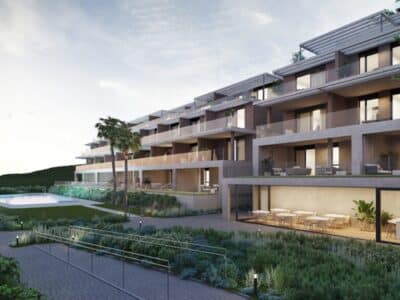
Etherna Homes – Valle Romano Estepona
Etherna Homes Valle Romano - 2 phase now on the…
Off Plan
215.000€
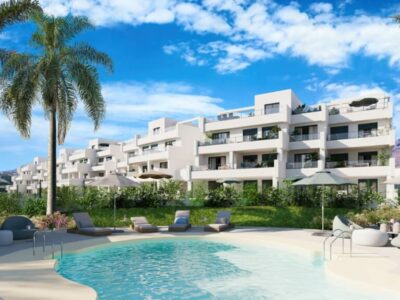
Aby Middle Estepona
Welcome to Aby Middle: two and three-bedroom apartments and penthouses…
Off Plan
303.000€

Etherna Apartments for Sale in Estepona
Discover Etherna Estepona, 135 modern apartments with stunning golf and…
Off Plan
315.000€