

Manilva Property Market Insights & Area Guide
Everything you need to know about Manilva before you buy: which areas suit which buyers, how the market works, what the coast and the village are really like, and what living here means outside July and August. If you already know the area, you can go straight to property for sale in Manilva.
Introduction to Manilva
Manilva is a municipality of around 18,000 registered residents (2024), covering roughly 36 km² at the south-western tip of the province of Málaga, where the Costa del Sol meets the border with Cádiz. Close to four in ten residents are foreign nationals, and the real population is higher still in summer. It is made up of a string of coastal urbanisations, a marina, the town of San Luis de Sabinillas and the inland village of Manilva, set on a hill among vineyards. Traditionally its economy rested on agriculture and fishing, and tourism and second-home ownership now drive much of the local activity.
The municipality of Manilva is a smaller, more relaxed alternative to the larger resorts further east, and we compare it with other options in our guide to the best places for second homes on the Costa del Sol. The climate is Mediterranean, with hot, dry summers and mild winters, and the coast faces south across the Strait of Gibraltar, so on a clear day the African coast is visible.
The location is a large part of the appeal. Gibraltar is around 35 minutes away by car, and Málaga airport is roughly an hour away by the AP-7 in normal traffic. Estepona is the next town to the east, with Puerto Banús and Marbella beyond it, and La Alcaidesa and Sotogrande lie just across the border to the west.
For buyers, the most important thing to understand upfront is that Manilva is not one market. The marina area, Sabinillas, the western urbanisations and the inland village are separate propositions with different buyers, different property types and different running costs. We describe each of them in the areas of Manilva, and choosing the right one saves a great deal of time later.
Nature and hiking in Manilva
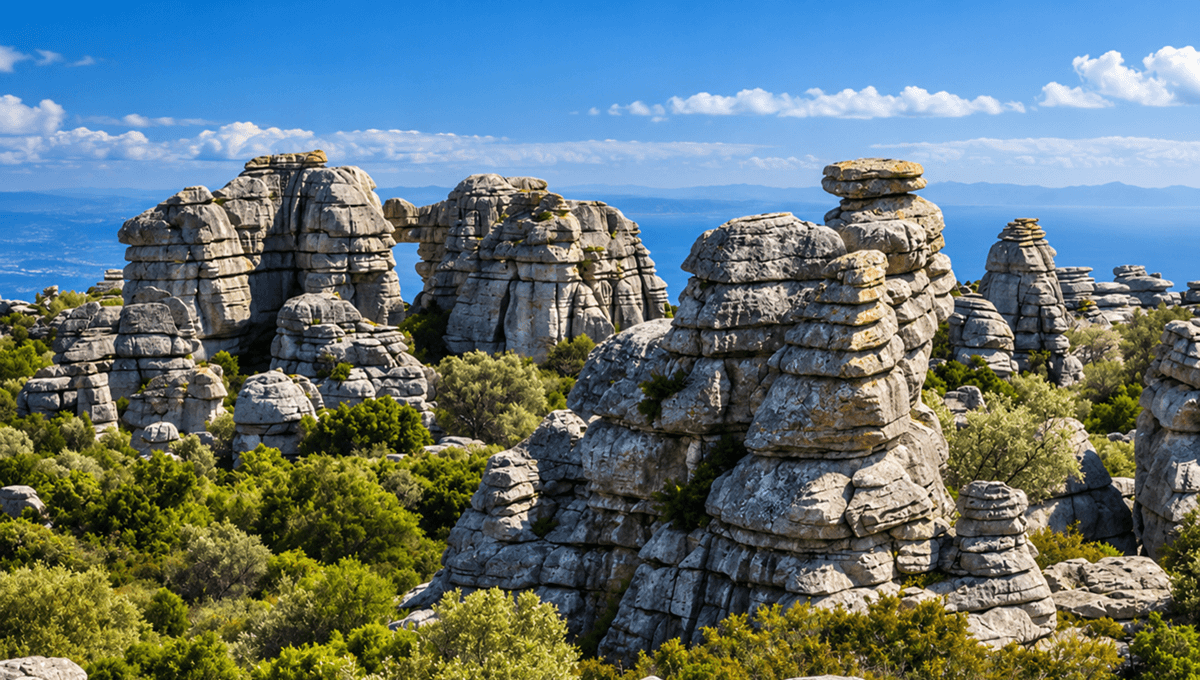
Hiking Trail – Manilva
Manilva is mostly known for its coast, but the municipality also reaches inland into the foothills of the Sierra de Utrera. That is where its best walking is, and it takes only a few minutes by car to get from the seafront to a landscape of limestone, vineyards and dry riverbeds.
El Canuto de la Utrera and the Roman Baths of La Hedionda
The best-known walk in the municipality follows the Manilva river inland to the Canuto de la Utrera, a narrow limestone gorge. Close to it are the Baños Romanos de la Hedionda, a sulphur spring with the remains of Roman-era baths and an old aqueduct. Local tradition links the baths to Julius Caesar, but treat that as legend rather than documented history.
Some practical points, based on the walking accounts we have consulted:
- The valley section is easy, along a usually dry stream bed. The climb through the gorge is a scramble in places, and the descent is harder on the knees.
- The route is marked with paint, and there is no formal car park at the start. The access track is narrow.
- The baths are busy with families at weekends and in July and August. Autumn and winter are much quieter.
- The sulphur water gives off a strong smell at times.
Trail conditions change, and some of the accounts we found are several years old. Check access and current conditions with the town hall’s tourism office before you set out.
Sierra de Utrera and the vineyards
The hills behind the village are planted with vines, and this is where the moscatel grapes the village is known for are grown. Even without a long route, a drive up to Manilva village and the surrounding countryside shows a side of the municipality that most coastal visitors never see.
The Senda Litoral
The Senda Litoral de Málaga is a coastal path designed to run along the whole Costa del Sol, from Nerja in the east to Manilva in the west, and Manilva is where it finishes. In the municipality the walkable stretch runs from the Aldea Beach and Playa Paraíso area along the seafront, passing the Castillo de la Duquesa, Sabinillas and Playa Ancha, and carries on towards Casares. The westernmost end, towards Punta Chullera on the border with Cádiz, was still under construction at the time of writing.
The path as a whole is not yet continuous along the entire coast, and published figures on how much is finished differ between sources, so check the stretch you want to walk before you go. For buyers, the practical point is simple: in Sabinillas and around the marina you can walk along the sea, with no road to cross, for several kilometres.
In our experience Manilva suits buyers who want a mix of beach, village life and open countryside close to home, rather than a purely urban or purely resort setting. You can see the properties available in Manilva by area and type.
Manilva property market insights
Manilva is a municipality of around 18,000 registered residents (2024), covering roughly 36 km² between the Mediterranean and the foothills of the Sierra de Utrera. Close to four in ten residents are foreign nationals, and the British community in particular has been established here for decades. That history matters for buyers, because the legal, banking and property services are used to dealing with international clients.
What drives the market
In our experience, Manilva attracts three kinds of buyer:
- Second-home buyers looking for a coastal apartment or townhouse in a development with a pool and gardens, with a more accessible entry point than the municipalities further east.
- Year-round residents, who tend to choose Sabinillas because daily life there can be done on foot.
- Buyers after views and privacy, who look at the higher western strip around La Chullera and Bahía de las Rocas, where the product is mostly villas and the outlook is towards the Strait and Africa.
Why location is everything here
Manilva is not one market but several that share a town hall. The marina area, Sabinillas, the western urbanisations and the inland village each have different buyers, different property types and different running costs. Two developments advertised under the same name can sit ten minutes apart by car and behave very differently on price, views and walkability. This is why we recommend looking at the map before the photos.
What to look at before buying
A few points deserve extra attention in Manilva:
- The community fee, which varies widely between developments and has a direct effect on the numbers, particularly in the lower price bands.
- What the community statutes say about holiday letting, if you plan to rent the property out.
- The distance to services. Many of the higher developments are not walkable.
Gibraltar is around 35 minutes away by car, which adds a layer of demand from people who work there. Estepona, La Alcaidesa and Sotogrande are all within easy reach, so Manilva is often compared with its neighbours. The honest comparison is that it offers a different balance of price, product and lifestyle rather than a cheaper version of the same thing.
If you would like to talk through the options, get in touch and we will help you narrow down the right area. You can also browse Manilva property for sale.
Apartments for sale in Manilva

1-Bedroom Penthouse with a 102 m² Terrace in Altos de Manilva, Castillo de la Duquesa
Penthouse in Altos de Manilva, a new gated community in…
Off Plan
318.250€

Ground Floor Apartment with a 67 m² Garden in Altos de Manilva, Castillo de la Duquesa
Ground floor end apartment in Altos de Manilva, Castillo de…
Off Plan
251.750€
Golf in Manilva
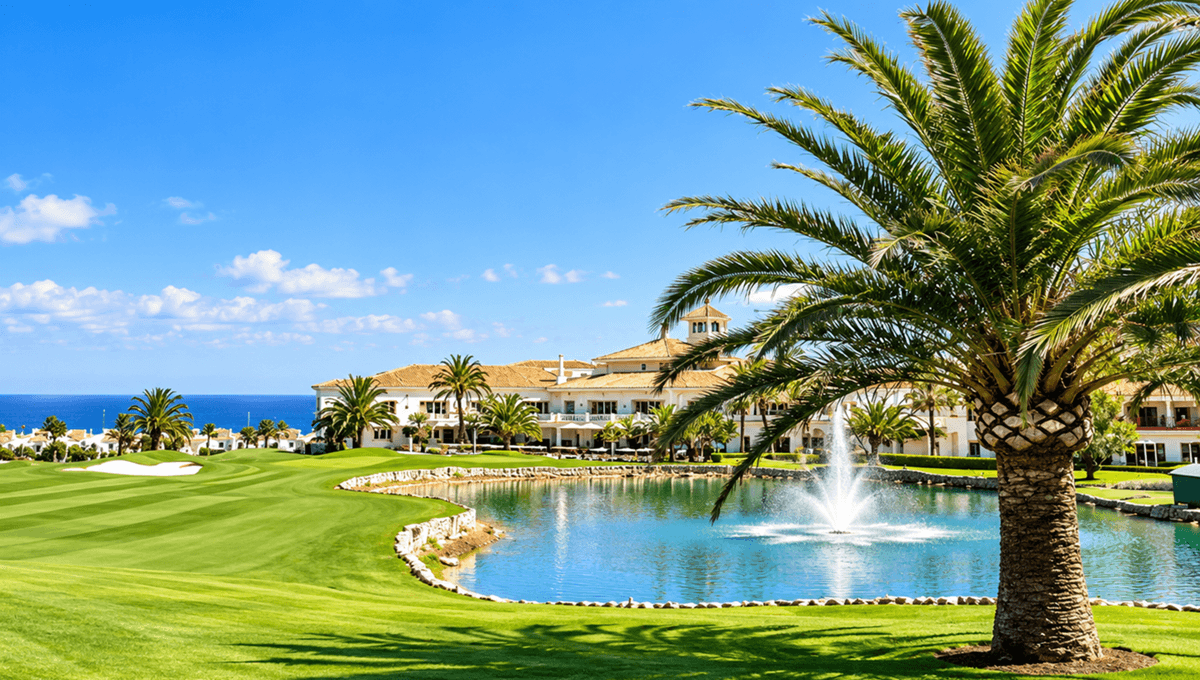
Duquesa Golf – Manilva
Manilva has one course of its own, and several more are within a short drive on both sides of the municipality, which makes it a practical base for a golf-oriented purchase.
La Duquesa Golf & Country Club
La Duquesa Golf & Country Club is built around the El Hacho hill, next to Puerto de la Duquesa, with views over the Mediterranean towards Africa. The course is described by the regional tourism board as being in the style of Robert Trent Jones, and one golf directory attributes the design to him. It sits within a country club that also offers tennis, squash, a gym and other sports facilities. The layout is hilly, with some notable elevation changes between tee and green, so it plays quite differently from the flatter courses further west.
We cover the marina, the club and the surrounding urbanisations in more detail in our La Duquesa area guide.
Courses nearby
Manilva sits between two of the most concentrated golf areas on the coast. To the west, La Alcaidesa and the Sotogrande area have several well-known courses. To the east, Estepona has its own group of courses, which we describe in our Estepona guide. Distances are short, but check the driving time to the specific course you have in mind, since the AP-7 and the N-340 do not always run at the same speed.
Buying with golf in mind
In our experience, a few questions come up again and again:
- Is the property within the golf complex or just near it? Views and access are not the same thing as membership.
- What are the green fees and membership terms for owners? These change from year to year, so ask the club directly.
- Is the development a quiet residential community or a high-turnover rental area? This affects both the experience and the resale.
Best beaches of Manilva
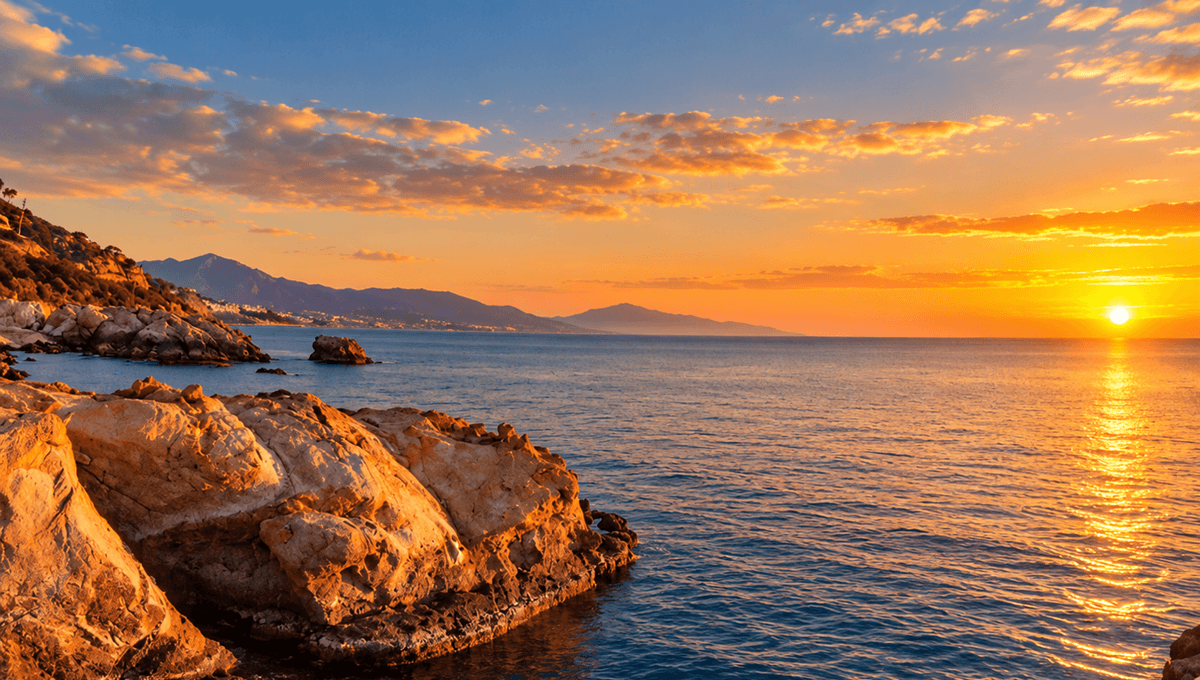
Sunrise in Punta Chullera – Manilva
Manilva has around ten beaches along its coast, depending on how the shoreline is divided. Most have dark, fine sand, and the character changes a lot between the busy urban beaches beside the marina and Sabinillas, and the quieter rocky coves towards the west. Only one of them, Sabinillas, holds a Blue Flag this season, so check the current list if that matters to you.
La Duquesa and Las Gaviotas
The beach beside the marina and the Castillo de la Duquesa is one of the liveliest in the municipality, with lifeguards, showers, chiringuitos and a children’s play area. Las Gaviotas, next to it, is smaller and calmer, and works well for families who want the marina within walking distance.
La Colonia
La Colonia lies between the Puerto de la Duquesa area and Sabinillas. It has calm water, a children’s play park and chiringuitos, which makes it popular with families.
Los Toros
Los Toros is a wide beach of dark sand and gravel, good for long walks. It links the Duquesa area with the stretch towards Playa del Negro and is generally quieter than the beaches beside the marina.
Sabinillas Beach
Sabinillas is the town beach and the busiest on a summer weekend. It is long, flat and well equipped, with lifeguards, showers, accessible access and a seafront promenade lined with restaurants. It is the only Manilva beach with a Blue Flag this season.
Playa Ancha
Playa Ancha is a very wide beach of fine dark sand with lifeguards, showers and chiringuitos. It suits families and long walks, and it is close to the Casares Costa side of the coast.
Aldea Beach and Playa del Negro
Aldea Beach is one of the longest in the municipality, with coarse dark sand, walkways and a seasonal chiringuito. It has a calm feel and lower occupancy than the beaches beside the marina. Playa del Negro, with darker sand and a semi-urban setting, continues along the same stretch of coast.
Las Arenas (El Gobernador) and Cala de la Sardina
Las Arenas, also known as El Gobernador or Playa Paraíso, is a relaxed beach of fine dark sand with slate and gravel, a small cliff and moderate waves. At one end is the small Cala de la Sardina cove. It is close to the N-340, so parking can be limited in the summer months.
Tubalita
Tubalita is a small beach of fine dark sand, only a few hundred metres at most, with no fixed chiringuitos. It is one of the quietest in the municipality and good for people who value calm over services.
Punta de la Chullera
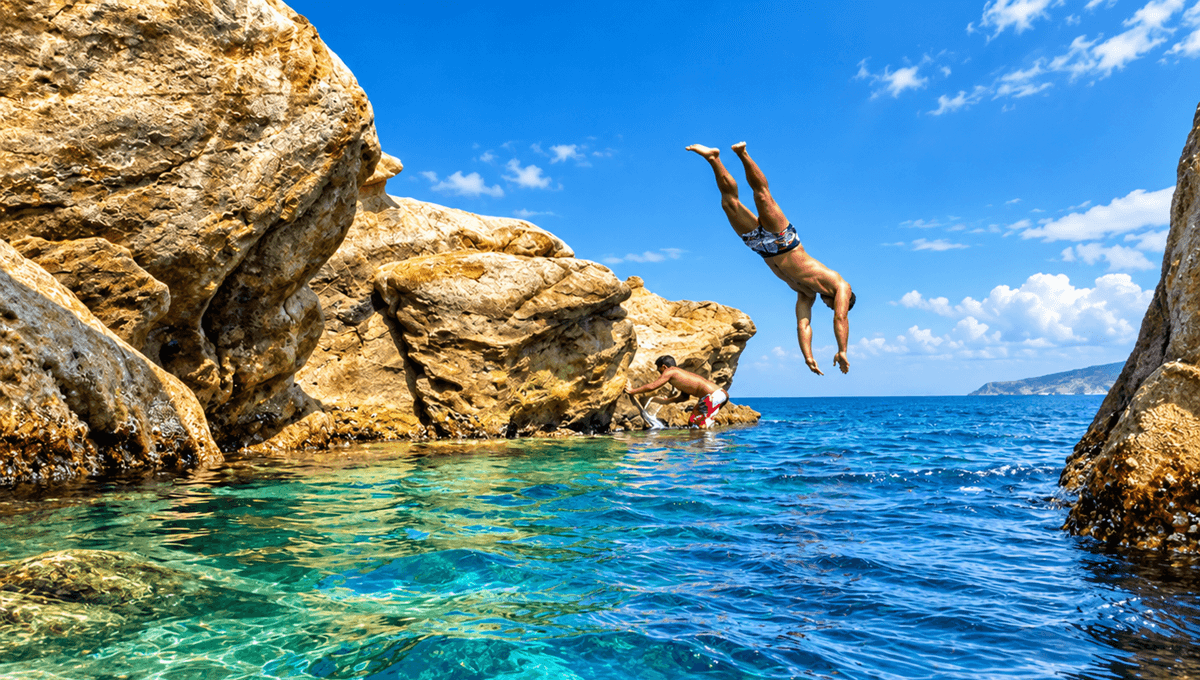
Punta Chullera – Manilva
At the western end of the municipality, Punta de la Chullera is a rocky headland with several small coves and clear water that is popular for snorkelling. It has the most natural feel of the coast, with lower attendance than the urban beaches and chiringuitos in some of the coves. Services are more limited, so it suits visitors who prefer scenery to amenities.
If you are looking at property near the sea, in our experience the beach matters less than how you plan to use the home: walking distance to the sand and services in Sabinillas and around the marina, or a quieter, car-dependent setting further west. You can browse homes for sale in Manilva by area.
Food, dining and things to do
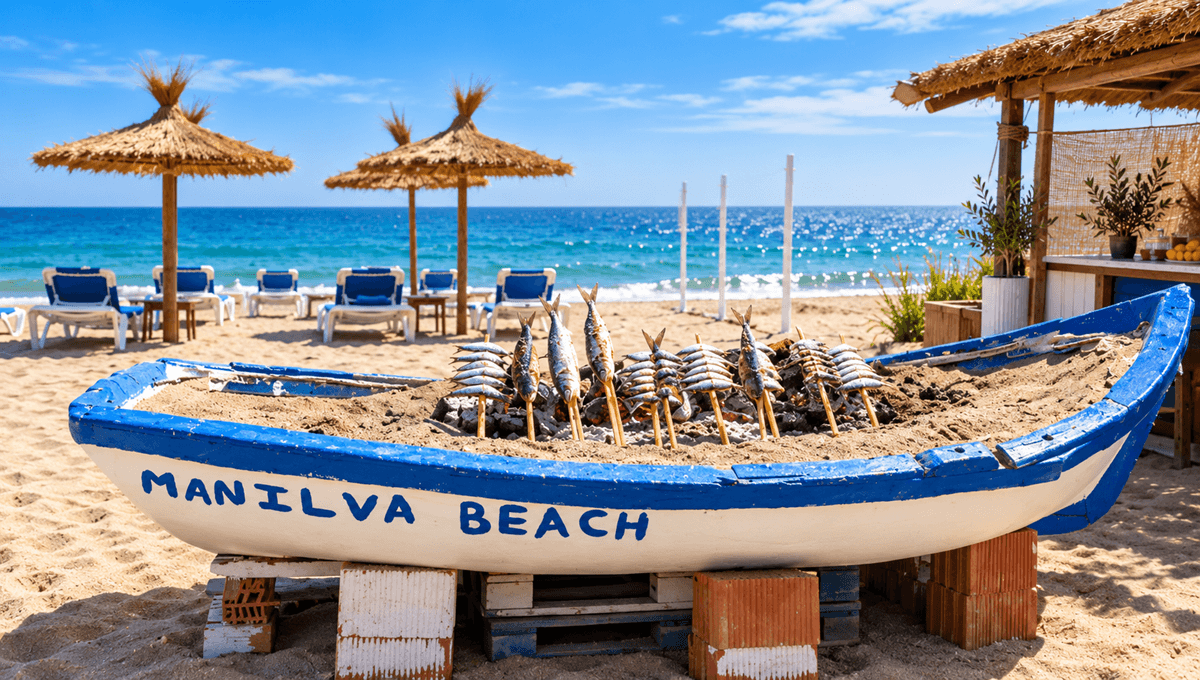
Manilva Beach Sardine Espeto by the Sea
Manilva’s social life is concentrated in two places: the marina at Puerto de la Duquesa and the seafront of Sabinillas. Between them, and along the beaches in between, you will find most of the restaurants, cafes and chiringuitos in the municipality, with a mix of Spanish, seafood and international kitchens.
Eating out at the Marina
The marina is the main meeting point, with a waterfront lined with bars and restaurants that stay open all year, although the atmosphere is livelier in summer. Water sports such as sailing, boat trips and diving are available around the port in season. The Castillo de la Duquesa and its archaeological museum are a short walk away, and we describe them in history and places of interest.
Sabinillas
Sabinillas is where daily life happens: a promenade lined with restaurants, local shops, supermarkets and the Sunday market, which has long been a fixture of the weekly calendar. Check the current market day and location with the town hall, as these can change.
Beach bars and local cooking
Most of the beaches described above have at least one chiringuito in season, and the cooking you will find is typical of the Málaga coast: grilled fish, fried fish and seafood, alongside the sweet moscatel wines the village is known for. For something more informal, the beach bars of Sabinillas and Duquesa are a good place to start.
Outdoor activities
Beyond the sea, the inland side of the municipality offers hiking, the Roman baths and the vineyards. We cover those in nature and hiking in Manilva.
If you are comparing places to live, in our experience it is worth spending a few evenings in both Sabinillas and the marina before you decide, because they feel quite different. You can see properties for sale in Manilva by area.
Fiestas and local events

Festivity in Manilva
Manilva’s calendar is busiest in summer, and several of its fiestas are among the best-known on this stretch of coast. The dates move from year to year, so confirm them with the town hall’s published programme before you plan a visit.
Luna Llena (Full Moon Party)
Held on the beaches of Sabinillas in summer, usually around the end of July or early August, on the Saturday closest to the full moon. It is a family-friendly night with live music, dancing and food and drink along the sand. In recent years, lantern releases have been discouraged because of fire risk.
Feria de Manilva
The village feria is usually held in August. It combines a fairground, casetas serving traditional food and wine, flamenco shows and live music that carries on into the early hours.
Fiesta de San Luis
The patron saint’s day of San Luis de Sabinillas is celebrated on 25 August, with a morning procession and mass and an evening of music and dancing in the town.
Fiesta de la Vendimia

Feria in Manilva
The grape harvest festival, held in the village on the first weekend of September, is one of the highlights of the year. It includes a flamenco festival, processions with horses and riders in traditional dress, and the treading of the first grapes. It is recognised as a Festival of Provincial Tourist Interest.
If you are thinking of buying in Manilva, it is worth visiting at least once in August and once outside the summer season, to see both sides of the municipality.
History and places of interest
Manilva’s history is longer than its modern resort image suggests. The area has been settled since prehistoric times, and the Castillejos de Alcorrín is an ancient fortified settlement documented by archaeologists. The Romans developed the coast around fish-salting works, and the remains of a Roman villa still lie beneath the Castillo de la Duquesa. In the Middle Ages the area formed part of the lordship of Casares and sat close to the frontier with the Kingdom of Granada. In the late 18th century Manilva gained the status of a town in its own right and separated from Casares. The 20th century then brought the marina, the golf course and the urbanisations that shaped the coast we know today.
The marina and the modern resort
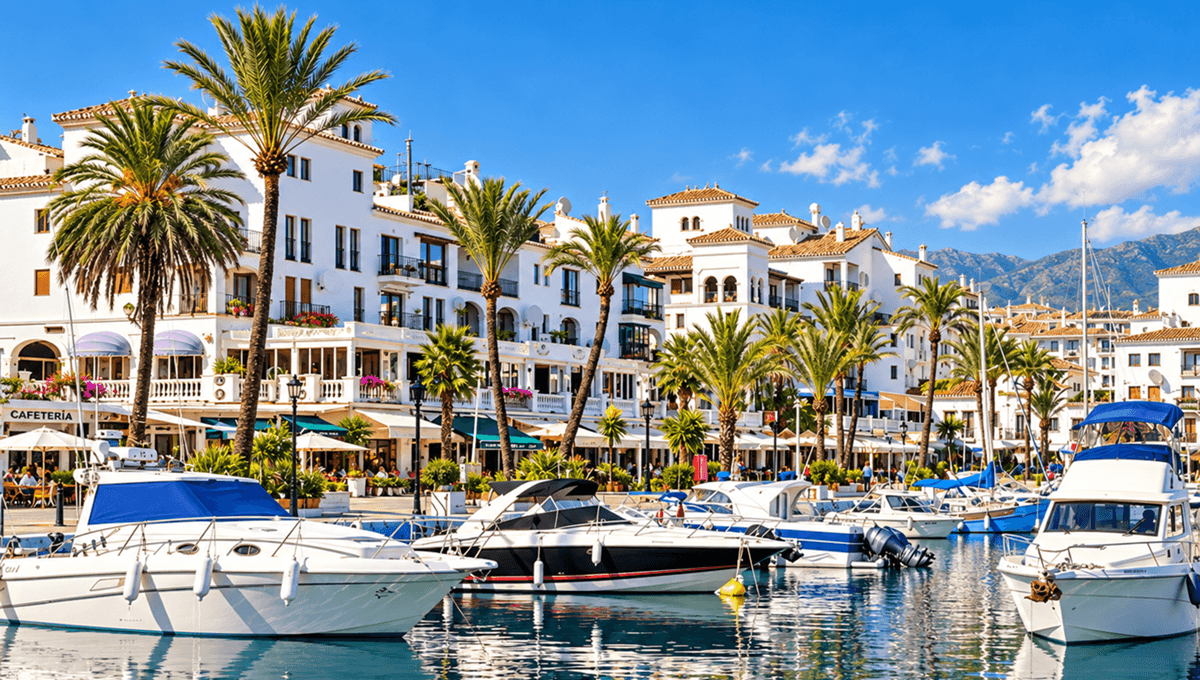
Puerto de la Duquesa – Manilva
The marina grew up around the golf course and the residential developments built from the 1970s onwards. It is now the best-known place in the municipality for visitors and second-home owners, and it sits only a short walk from the castle.
Castillo de la Duquesa and the archaeological museum
The castle, also known as the Fortín de Sabinillas, is an 18th-century coastal fort built to protect the anchorage. It stands on the remains of a Roman villa and was partly built with materials from the site. Today it houses the Museo Arqueológico Municipal de Manilva, with finds from Roman baths, fish-salting facilities and a necropolis, as well as material from the Castillejos de Alcorrín. Opening hours and admission change, so check with the town hall before you visit.
Baños Romanos de la Hedionda
The Roman baths are fed by a sulphur spring and lie near the entrance to the Canuto de la Utrera. We describe the walk, and the practical points to bear in mind, in nature and hiking in Manilva.
Manilva village

Harvest of Green Grapes Manilva
The inland village, set among vineyards, is the historic heart of the municipality. Its streets, church and plazas give a taste of traditional Andalusian life, and it hosts the Vendimia each September. The vineyards around it produce grapes for wines under the Málaga designation of origin.
If you want to know more about the history of the region, the best starting point is the museum in the castle. For a sense of how the municipality feels today, see the areas of Manilva.
The areas of Manilva
Manilva is a string of settlements along the coast plus one village inland, and they differ a lot from each other. Here is a guide to each of them, so you can see which one fits the way you plan to use the property.
Puerto de la Duquesa
The marina and its surroundings form the best-known enclave in the municipality. It is the area most buyers see first, and in our experience it is where second-home and holiday-rental demand is most visible.
- What you’ll find here: the marina, a seafront lined with restaurants and cafes, apartments and townhouses in developments with communal pools and gardens.
- What’s around: Playa de la Duquesa, the Castillo de la Duquesa and La Duquesa Golf & Country Club. See our La Duquesa guide for more.
Castillo de la Duquesa
The area takes its name from the castle, an 18th-century coastal fort, also known as the Fortín de Sabinillas. It stands on the remains of a Roman villa, and today it houses the municipal archaeological museum. The surrounding neighbourhood is residential and sits right beside the marina, so you get a historic landmark and the port lifestyle within walking distance.
- What you’ll find here: residential communities, mostly apartments and townhouses, next to the castle and the seafront.
- What’s around: the Museo Arqueológico Municipal de Manilva inside the castle, the marina, Playa de la Duquesa and the golf club. Check opening hours with the town hall before you visit.
Duquesa Village
Duquesa Village sits right next to the marina and is mostly made up of apartment and townhouse developments built with second homes in mind. It offers the marina lifestyle at walking distance, and the age and quality of the buildings vary by development, so it pays to compare them one by one.
- What you’ll find here: low-rise residential communities, mostly apartments and townhouses.
- What’s around: the marina, the beach and the golf club.
Aldea Hills and Aldea Beach
Aldea Hills sits between the Castillo de la Duquesa area and the beach, on the slope above the coast, and Aldea Beach is the part closest to the sea. Both are gated, resort-style communities aimed at second homes and holiday use rather than at daily life on foot. In our experience the practical difference is that Aldea Hills is the more established, with larger shared grounds, while Aldea Beach is the one nearer the water and is where recent new-build apartment projects have appeared. Check the current availability of both.
- What you’ll find here: apartments and penthouses in communities with pools and gardens. In Aldea Hills, some communities also have extensive shared facilities, such as several pools, a restaurant, sports courts and a gym, according to listings we have seen.
- What’s around: the Castillo de la Duquesa and the marina on one side, and the beach and Playa del Negro on the other. Most errands need a car.
La Noria
La Noria is a residential area on the stretch between the marina and the centre of Sabinillas. Its appeal is its position: close enough to the town to use its shops, services and promenade, and without being in the busiest part of it.
- What you’ll find here: residential developments, mostly apartments and townhouses.
- What’s around: the beaches along this stretch of coast and the services of San Luis de Sabinillas.
San Luis de Sabinillas
Sabinillas is the town that handles everyday life in the municipality, and the only place where daily life is walkable: supermarkets, a pharmacy, a health centre and a seafront promenade used by locals as well as visitors. In our experience it is the natural choice for anyone planning to live here year-round.
- What you’ll find here: town-centre apartments, a mix of local shops and restaurants, and a busy promenade.
- What’s around: Sabinillas Beach, the Sunday market and the road links towards Estepona and Gibraltar.
Las Arenas and Playa Paraíso
Further west the coastline becomes more natural, with urbanisations set directly behind rocky and sandy beaches. Access is mostly by car and the N-340 runs close by.
- What you’ll find here: residential urbanisations close to the sea, mainly apartments and townhouses.
- What’s around: Las Arenas (Governor Beach), the small Cala de la Sardina cove and the western end of the Senda Litoral.
La Paloma
La Paloma is a residential urbanisation on the hillside above the western beaches of Manilva. In our experience it is one of the areas where the product leans towards villas on larger plots, and its main selling point is the outlook: open views over the Mediterranean from an elevated, quiet setting. As in the other higher areas of the municipality, a car is part of daily life.
- What you’ll find here: villas on generous plots, plus some apartments and townhouses, in a quiet residential setting.
- What’s around: the western beaches a short distance below, and quick road access towards Puerto de la Duquesa and Sotogrande.
Bahía de las Rocas
Bahía de las Rocas is one of the areas that offers the Strait of Gibraltar and the African coast in front of you. The trade-off is that daily errands generally need a car.
- What you’ll find here: villas and apartments with sea views and more privacy than the marina area.
- What’s around: the western coves and beaches, and the road to Sabinillas.
La Chullera
La Chullera is the westernmost part of the municipality, towards the border with Cádiz province. It combines open views with the most natural stretch of coast in Manilva.
- What you’ll find here: villas on larger plots in the higher parts, with views towards the Strait and Africa, plus some apartments.
- What’s around: Playa de la Chullera and Punta de la Chullera, with their rocky coves.
Manilva village
The village sits inland on a hill, among vineyards, and is a different market from the coast. It is mostly resale: traditional houses and townhouses on narrow streets, with more space and character, at the cost of a few kilometres to the beach.
- What you’ll find here: village houses and townhouses, almost entirely resale.
- What’s around: the vineyards of the Sierra de Utrera and the trails we describe in the nature and hiking section.
If you are unsure which zone fits you, tell us how you plan to use the property and we will help you narrow it down. You can also see all properties for sale in Manilva filtered by area.
Villas for sale in Manilva

Luxury Villa with Panoramic Sea Views in Bahía de Las Rocas, Manilva
Turnkey designer villa with panoramic sea views, heated pool and…
Off Plan
3.700.000€

Luxury Semi-Detached Villas for Sale in Manilva
Luxury semi-detached villas in Manilva with sea views, private pools…
Off Plan
652.800€
Manilva FAQs
Below we’ve answered some of the most common questions about the Manilva area. If you have any other questions, please don’t hesitate to get in touch.
Which developments make up the municipality of Manilva?
Manilva is a string of settlements spread between the coast and the interior, and that spread is why it is so often misunderstood. Along the coast you will find Puerto de la Duquesa, Castillo de la Duquesa and Duquesa Village, which together form the best-known enclave; Aldea Hills and Aldea Beach; La Noria and San Luis de Sabinillas, the town that handles everyday life; Las Arenas and Playa Paraíso; and, out towards the Cádiz border, La Paloma, Bahía de las Rocas and La Chullera. Inland sits the village of Manilva. Anyone searching from abroad finds developments advertised under half a dozen different names without realising they all fall within the same municipality, and ends up comparing things with nothing in common. We describe each of them in the areas of Manilva.
What kind of property is for sale in Manilva?
The bulk is two and three bedroom apartments and penthouses in developments with pools and landscaped grounds, most of them built with second homes in mind. Alongside that come townhouses and semi-detached properties, and detached villas on their own plots in the higher parts of the western strip, where the product changes completely. Plots come up too. The village supplies a market of its own, small and almost entirely resale, with traditional houses and townhouses on narrow streets.
Which parts of Manilva should I look at?
The choice depends on how you’ll use the property rather than on your budget. For a second home or letting, the marina area and the coastal strip are the obvious ones, for turnover and for services. If you’re staying for long stretches or living here year-round, Sabinillas is the only place where daily life is walkable: supermarkets, a pharmacy, a health centre and a promenade with local custom rather than just visitors. If what you want is a villa with views and privacy, La Chullera and Bahía de las Rocas offer the Strait and Africa in front of you, with the trade-off that nothing up there is on foot. And the village is for anyone who puts character and square metres above being near the sea. You can see all the properties available in Manilva filtered by area and type.
What’s the difference between new build, off-plan and resale?
Off-plan means coming in before or during construction. The usual structure is 20% to 40% of the price paid in stages across the build, with the balance on handover before a notary. New build is a finished, never-occupied property. Resale is a previously owned home, and in our experience it carries real weight here because a good part of the coastal stock was built decades ago. On tax, the first two are charged VAT plus stamp duty and the third transfer tax. If you buy off-plan, the developer is legally required to guarantee every payment made in advance through a bank guarantee or insurance policy: check that the guarantee exists and is in your name before the first payment.
What taxes and costs are involved?
New build is charged 10% VAT plus 1.2% stamp duty. Resale is charged 7% transfer tax. Adding notary, land registry and your lawyer’s fees, total costs land at around 12-14% on new build and around 10-11% on resale. If you are financing, add the valuation and the mortgage costs. Tax rates can change, so confirm the current figures with your lawyer before you budget.
What are the running costs once I’ve bought?
Annual property tax (IBI), community fees and utilities, plus an annual tax return for non-residents, which applies even if you do not rent the property out. The community fee deserves particular attention, because the range between developments in this municipality is very wide: one with a pool, extensive gardens and security can cost several times what a straightforward block costs at the same distance from the beach. Always ask for the full breakdown before signing, not an approximate figure.
Can I rent the property out to holidaymakers?
It is possible, but there are now more steps than there used to be, and in some coastal zones new tourist licences may not be available at all. In December 2025, Manilva’s council approved a three-year suspension on new tourist rental licences in the coastal zones it considers under pressure, including El Hacho, Puerto de la Duquesa, Los Hidalgos and Princesa Cristina, so a property without an existing licence may not be able to obtain one there. Ask the town hall which zone a property falls into before you reserve. Where licences are available, the property has to be registered in the Registro de Turismo de Andalucía as a tourist-use home (the licence known until recently as VFT, now called VUT), and it has to meet the technical and planning requirements. Since the April 2025 reform, a community of owners must also give prior authorisation, by a three-fifths majority, before a flat in the building can start tourist activity. Homes already operating legally before that date can continue. Go through the statutes and the minutes of the last few years before you reserve, and check the current rules with your lawyer, because this area changes often.
What’s the difference between Manilva village and the coast?
Two markets that share a town hall and not much else. The village sits inland on a hill, among vineyards, with a moscatel wine tradition that’s still alive. What sells there is village houses and traditional townhouses, almost always resale, with more space and more character for the same money, at the cost of a few kilometres to the beach. The coast holds the new build, the second-home product and the rental market. Most international buyers end up on the coast, but anyone after the other thing usually knows it from the outset: they’re profiles that don’t cross over.
Is Manilva a good area to invest in?
It has three things in its favour. The entry point, which in our experience is one of the more accessible on the western coast and typically lower than in Estepona, a town only around twenty minutes away. Holiday rental demand, established along the coastal strip for decades. And Gibraltar 35 minutes away, which adds a layer of long-term letting that doesn’t depend on the season. That said, the actual return always comes down to the specific development, the entry price and the community fee, not to the municipality in the abstract. And before buying with rental in mind there are two checks that aren’t optional: that the community allows tourist letting, and that the particular property can obtain its tourist-use registration.
Can a foreigner buy in Manilva?
Yes, with no restrictions, resident or not. You’ll need an NIE, a Spanish bank account and, if you’re financing, a non-resident mortgage. Manilva has had an established international community for decades, with a particularly strong British presence, so the process is well worn here and you’ll find advisers used to this kind of purchase.
What should I check before buying in Manilva?
Three things, and the third is specific to here. First, the community fee, because on lower-priced property it changes the sums entirely. Second, what the statutes say about tourist letting, if that’s your intention. And third: check exactly where the property is. Between two developments both advertised as “Manilva” there can be ten minutes by car and a substantial difference in price, in views and in whether you can walk anywhere at all. It’s the municipality where looking at the map matters more than looking at the photos.
Off plan developments for sale in Manilva
Luxury Villa with Panoramic Sea Views in Bahía de Las Rocas, Manilva
Turnkey designer villa with panoramic sea views, heated pool and…
Off Plan
3.700.000€
1-Bedroom Penthouse with a 102 m² Terrace in Altos de Manilva, Castillo de la Duquesa
Penthouse in Altos de Manilva, a new gated community in…
Off Plan
318.250€
Ground Floor Apartment with a 67 m² Garden in Altos de Manilva, Castillo de la Duquesa
Ground floor end apartment in Altos de Manilva, Castillo de…
Off Plan
251.750€

1-Bedroom Apartments in Altos de Manilva, Castillo de la Duquesa
Altos de Manilva is a new gated community of 88…
Off Plan
235.000€