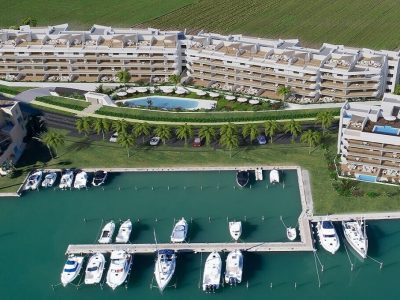

A sea view, a striking contemporary design and a sought-after address in Marbella or Sotogrande can make a property decision feel straightforward. Yet the legal position behind the home matters just as much as the setting. If you are wondering how to verify planning permission before committing to a purchase in Spain, the answer begins with the local town hall, not the sales brochure.
For an off-plan purchase, a new villa or a resale property that has been extended, proper planning due diligence protects both the lifestyle you expect and the value of your investment. On the Costa del Sol, where municipalities, planning frameworks and property histories vary considerably, it should be treated as a central part of the buying process.
How to verify planning permission in Spain
Planning permission in Spain is generally known as a licencia urbanística or building licence. It is issued by the relevant local authority, known as the Ayuntamiento. A licence confirms that a specific project has been authorised under the planning rules that apply to that plot or building.
The most reliable route is to ask an independent Spanish property lawyer to obtain and review the planning documentation directly with the municipality. A selling agent or developer may provide copies, but an independent verification is essential. Documents can be incomplete, outdated or relevant only to an earlier version of a project.
The lawyer should confirm that the licence exists, identify its reference number and date, and ensure it covers the property being sold. This last point is particularly significant with off-plan developments. Permissions are granted for defined plans, including the number of dwellings, built area, height, use and, in many cases, communal facilities. A stylish revised layout or enlarged terrace should not simply be assumed to fall within the original consent.
In practical terms, the town hall can confirm the status of the planning file, or expediente. It may show whether the licence is valid, subject to conditions, amended, suspended or challenged. Where construction has not yet started, the validity period also deserves attention, as licences are normally granted with deadlines for starting and completing the works.
Start with the right property documents
A planning check should be built around the precise legal identity of the property, not merely its marketing name. Ask for the address, plot reference, land registry details and cadastral reference. These records serve different purposes and do not always align perfectly, especially with older homes, rural plots or properties altered over time.
For a new development, request the building licence, approved project details and the developer’s identification. For a resale home, ask for the title deed, a recent land registry extract, the cadastral record and any documents relating to later works, such as a pool, basement conversion, guest house or enclosed terrace.
This is not paperwork for paperwork’s sake. A villa may be registered with one built area while the physical home includes additions that were never approved. That can complicate financing, a future sale, insurance or a planned renovation. It may also leave a buyer exposed to enforcement action, even if the work was carried out by a previous owner.
Check the land classification and permitted use
A building licence is not the only issue. The plot itself must be suitable for the use proposed. Your lawyer should review the local planning plan and obtain, where appropriate, a planning or urbanistic report from the Ayuntamiento.
The key questions are whether the land is classed for residential development, whether the intended use is permitted, and whether there are restrictions affecting buildability, height, boundaries, access or protected land. In premium hillside locations around Benahavís, for example, views and privacy are often balanced against stricter topographical, environmental or infrastructure requirements.
For land purchases, this step is decisive. A plot advertised with architectural potential is not the same as a plot with a confirmed right to build the home you have in mind. The buyer should establish the permitted buildable area, occupancy ratio, maximum height and any obligation to connect to roads, water, drainage or utilities before agreeing a design or construction budget.
Confirm the property matches the approved plans
A planning licence approves a particular project, not an open-ended concept. Compare the approved plans with the home that is being built or has been completed. Your lawyer will lead on legal verification, while an independent architect or surveyor can provide valuable technical insight where plans, measurements or structural works are unclear.
Small differences are not always problematic. Developers may make lawful adjustments during construction, and certain changes may be covered by an amended licence or permitted procedure. However, material deviations need clear evidence of regularisation or approval.
Pay particular attention to features that influence a home’s value and use: rooftop terraces, private pools, underground garages, storage rooms, landscaped communal areas and sea-facing extensions. If a feature is a deciding factor in your purchase, it should appear clearly in the contractual documentation and be legally supportable.
Extra checks for off-plan homes
Buying off-plan offers a compelling route into Costa del Sol living: contemporary architecture, energy-efficient design, resort-style amenities and the opportunity to secure a home before completion. It also requires more structured due diligence because the finished property does not yet exist.
Before paying a reservation fee or signing a private purchase contract, verify that the developer owns or has the legal right to develop the land, that the building licence has been granted, and that the project corresponds with the unit being offered. The purchase contract should describe the property, parking, storage, specifications, completion timetable and any communal elements with precision.
Equally important are the financial protections. Amounts paid in advance for a qualifying off-plan home should be protected by the appropriate bank guarantee or insurance arrangement. Your lawyer should confirm the protection in place for each stage payment, rather than relying on a general statement that deposits are secure.
At completion, the development will normally require the relevant first occupation or use documentation before the home can be occupied and services can be fully arranged. Terminology and procedure can differ between municipalities and autonomous communities, so a lawyer familiar with Andalucía should confirm what is required for that specific development.
A respected developer with a strong local record is reassuring, but it does not replace independent checks. The most attractive new-build opportunity is one where the legal, technical and commercial details are all aligned.
Planning permission on resale and renovated homes
Resale homes can present a different set of questions. A traditional Andalusian villa may have evolved over decades, while a frontline golf property may have been substantially modernised by its current owner. Do not assume that a completed renovation was authorised simply because it is beautifully finished.
Ask whether works required a licence and, if so, whether the correct approval was granted. Major alterations usually need formal permission; more modest works may follow a simplified route, depending on the municipality and nature of the project. The question is not whether a change looks sensible, but whether it has been recorded and approved correctly.
Older properties can require a more nuanced assessment. Some works may be outside the period for planning enforcement, yet this does not automatically make them fully compliant or remove every practical risk. A specialist lawyer can explain whether the position is capable of being regularised, how it affects the title and whether it is acceptable to a lender or future buyer.
Treat timing as part of the negotiation
Planning verification should happen before you become contractually committed, or the contract should make your obligation conditional on satisfactory legal due diligence. This is especially relevant when buyers are travelling from the UK or elsewhere in Europe and feel pressure to reserve a limited-release property quickly.
A reservation can be appropriate when a desirable home is likely to attract competing interest, but it should not prevent proper investigation. Ensure the reservation terms are reviewed, the property is clearly identified and there is a defined route for recovering funds if material legal issues emerge.
The same principle applies to completion dates. With off-plan homes, construction schedules can move for legitimate reasons, including utility connections, municipal procedures or final documentation. The contract should address the anticipated delivery date, permitted extensions and the buyer’s remedies if delays become excessive.
A confident purchase begins with independent advice
Planning permission is not a box to tick after you have fallen in love with a home. It is evidence that the property you are buying can be built, used and enjoyed as intended. For buyers considering a contemporary apartment in Estepona, a golf villa in Sotogrande or a hillside residence near Marbella, that certainty supports both peace of mind and long-term resale appeal.
The finest Costa del Sol properties combine exceptional setting with careful execution. Give the legal foundations the same attention you give to orientation, architecture and views, and your purchase can feel every bit as secure as it is inspiring.
Ready to buy with full legal confidence?
A beautiful property is only as secure as the paperwork behind it. At The Property Agent, I work alongside independent lawyers to make sure buyers understand exactly what’s been approved, not just what’s been built.
If you’re considering a purchase in Sotogrande, Estepona, Benahavís or elsewhere on the Costa del Sol, let’s talk through what to verify before you commit, so the home you choose is as sound on paper as it is in person.