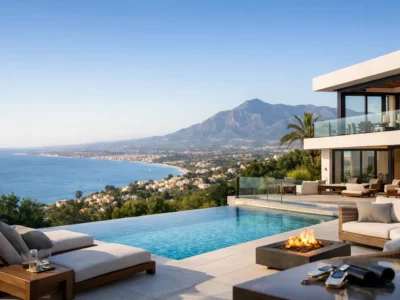
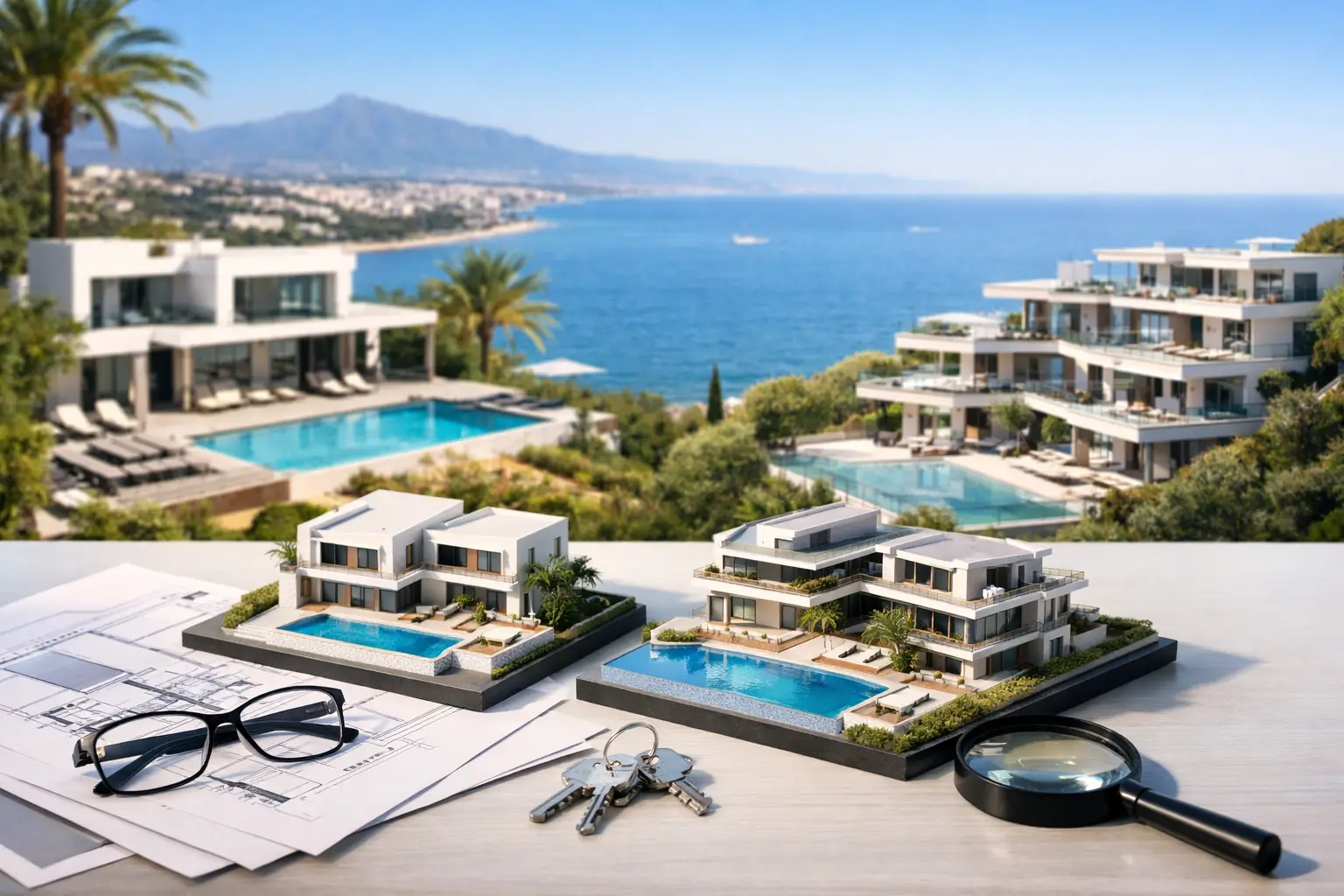
A sea view can make two new-build homes look equally compelling on a brochure. Yet one may sit within walking distance of a marina, have a proven developer behind it and offer genuine year-round appeal, while the other depends on a car, carries higher running costs and may face new construction in front of it. Knowing how to compare luxury developments means looking beyond the show home and judging the details that protect both your lifestyle and your investment.
For buyers on the Costa del Sol, the strongest choice is rarely the development with the most dramatic pool or the largest introductory discount. It is the one where location, specification, legal structure, delivery confidence and future desirability work together.
Start with the micro-location, not the postcode
Marbella, Benahavís, Estepona and Sotogrande are powerful names, but each covers distinct micro-markets with different rhythms, views and buyer profiles. A hillside address in Benahavís may offer privacy, golf and sweeping Mediterranean panoramas, while a central Marbella residence provides walkability to restaurants, beach clubs and everyday services. Neither is inherently superior. The right choice depends on how you plan to use the property.
Visit the immediate setting at different times of day. Check the approach road, traffic, gradient, surrounding plots and what can realistically be built nearby. In coastal locations, confirm whether the view is protected or simply unobstructed for now. A first-line beach residence in Estepona may command a premium for direct access and strong rental demand; a golf-front villa in Sotogrande may offer greater space and tranquillity. Both can be excellent purchases, but their resale audiences are not the same.
Connectivity matters as much as scenery. Consider journey times to Málaga Airport, international schools, healthcare, supermarkets, marinas and the places you will use in winter, not only in August. A beautiful home that feels isolated outside the holiday season can be less flexible when it comes to resale or letting.
Compare the lifestyle each development actually delivers
Luxury is increasingly defined by ease. Look at whether the development supports the life you want without creating unnecessary friction. For a lock-up-and-leave second home, 24-hour security, concierge services, underground parking and professional community management may be decisive. For a family base, usable outdoor space, storage, access to schools and a practical internal layout often matter more than a statement entrance lobby.
Amenity lists deserve careful reading. A spa, gym, co-working lounge, residents’ club and indoor pool can add genuine appeal, especially in a secure resort-style community. They also create ongoing maintenance obligations. Ask what will be completed at handover, who will manage it, and how the cost is reflected in community fees. The best amenity offering is one you will use and that future buyers will value, not a long list of features with little everyday purpose.
How to compare luxury developments beyond the visuals
Architectural imagery is designed to create emotion. Your comparison should also test the substance behind it. Request the quality specification, floor plans, plot plan and full price schedule for every development under consideration. These documents reveal far more than the marketing suite.
Start with the home itself. Ceiling heights, window dimensions, orientation, terrace depth and storage are not minor details. A south or south-west aspect may maximise sunshine through winter, but a west-facing terrace can become very warm in high summer without appropriate shading. Cross ventilation, solar control glazing and thoughtful landscaping can make a meaningful difference to comfort and energy use.
Examine the specification with a practical eye. Established luxury developments should be clear about brands or performance standards for kitchens, appliances, bathrooms, climate control, insulation, flooring and smart-home systems. Broad phrases such as “premium quality” are not enough on their own. Clarify what is included in the purchase price, what is an upgrade, and whether the developer can offer a tailored package before construction reaches the relevant stage.
Build quality is also about what you cannot immediately see. Ask about energy certification, aerothermal systems, underfloor heating zones, acoustic insulation, ventilation and water management. These choices influence running costs, comfort and long-term marketability. In a premium market, buyers increasingly expect homes that are attractive, efficient and simple to maintain.
Put the developer under the same scrutiny as the property
A strong developer does not eliminate risk, but it materially improves confidence. Review its completed projects, delivery record, build quality and after-sales reputation. If possible, visit one of its earlier developments and look beyond the original design: assess how communal areas, façades and landscaping have aged.
For off-plan purchases, the contract and payment structure deserve close attention. Your reservation payment, staged instalments and final balance should be clearly set out, alongside expected completion dates and what happens if delivery is delayed. Amounts paid during construction should be covered by the appropriate bank guarantees or insurance protection, subject to independent legal advice.
Planning status is equally important. Confirm that the development has the necessary permissions and understand whether construction has started, is nearing completion or remains at an early sales stage. Buying early can offer the greatest choice of position and pricing, but it requires more patience. A near-complete home offers greater certainty and allows you to judge the finished environment, although the best units may already be sold.
Compare the true ownership cost
The purchase price is only the first figure. Two homes priced similarly can have very different annual commitments. Ask for realistic estimates of community fees, IBI local property tax, rubbish collection, insurance, utilities and any club, concierge or resort charges.
A penthouse with extensive shared facilities may carry higher fees than a villa in a smaller gated community. Conversely, a detached villa can bring greater responsibility for private gardens, pools, security and repairs. There is no universal answer: a buyer seeking effortless ownership may consider higher community fees worthwhile, while a more hands-on owner may prefer independence and lower shared costs.
Factor in furnishing from the outset. Many off-plan homes are delivered with fitted kitchens and bathrooms but without the furniture, lighting, window dressings and exterior pieces needed for immediate enjoyment. A professionally designed furniture package can be convenient, particularly for overseas buyers, but compare its scope and value rather than treating it as an afterthought.
Judge value through scarcity and future demand
A luxury development should feel distinctive for reasons that will still matter in five or ten years. Limited supply near the beach, a respected golf address, protected natural surroundings, proximity to a marina or a genuinely walkable town setting can all support enduring demand. This is why a smaller development in an exceptional location may outperform a larger scheme with more impressive communal facilities.
Compare each unit within its own development as carefully as you compare developments against one another. The cheapest home is not always the best value. Consider floor level, outlook, privacy, noise exposure, parking, storage and distance from the entrance, pool or neighbouring blocks. In many projects, a superior corner position, larger terrace or open view can make a substantial difference at resale.
If rental income is part of your plan, be realistic. High-quality homes in Marbella, Estepona, Casares and Sotogrande can attract strong holiday demand, but income varies with seasonality, location, property type and management quality. Confirm whether tourist rentals are permitted by the community rules and local regulations, and do not base the purchase solely on peak-season projections. A home with broad owner-occupier appeal is generally more resilient than one designed only for short-term letting.
Use a disciplined comparison process
It is easy to lose clarity after viewing several elegant show homes. Keep a written comparison for each shortlisted development, covering the micro-location, developer, delivery stage, specifications, ownership costs, views, community model and resale appeal. Give more weight to the factors that reflect your own priorities rather than allowing a single feature to dominate the decision.
The Property Agent can help buyers assess these points in context, including the differences between established addresses and emerging areas across the Costa del Sol. Independent legal and tax advice should always sit alongside property guidance, particularly for off-plan contracts and overseas ownership structures.
The right luxury home should still feel exciting when the paperwork is open and the numbers are on the table. Choose the development that gives you confidence in both moments: the first time you step onto the terrace, and the years that follow when the property has become part of your life in Southern Spain.
Ready to compare luxury developments on the Costa del Sol?
Two developments can look almost identical on paper and deliver very different ownership experiences. At The Property Agent, I help buyers look past the show home — at the developer’s track record, the real specification, and the ownership costs that follow long after completion.
If you’re comparing new luxury developments in Marbella, Benahavís, Estepona, Sotogrande or Casares, let’s go through the details side by side, so the choice you make is the one that still feels right years from now.