
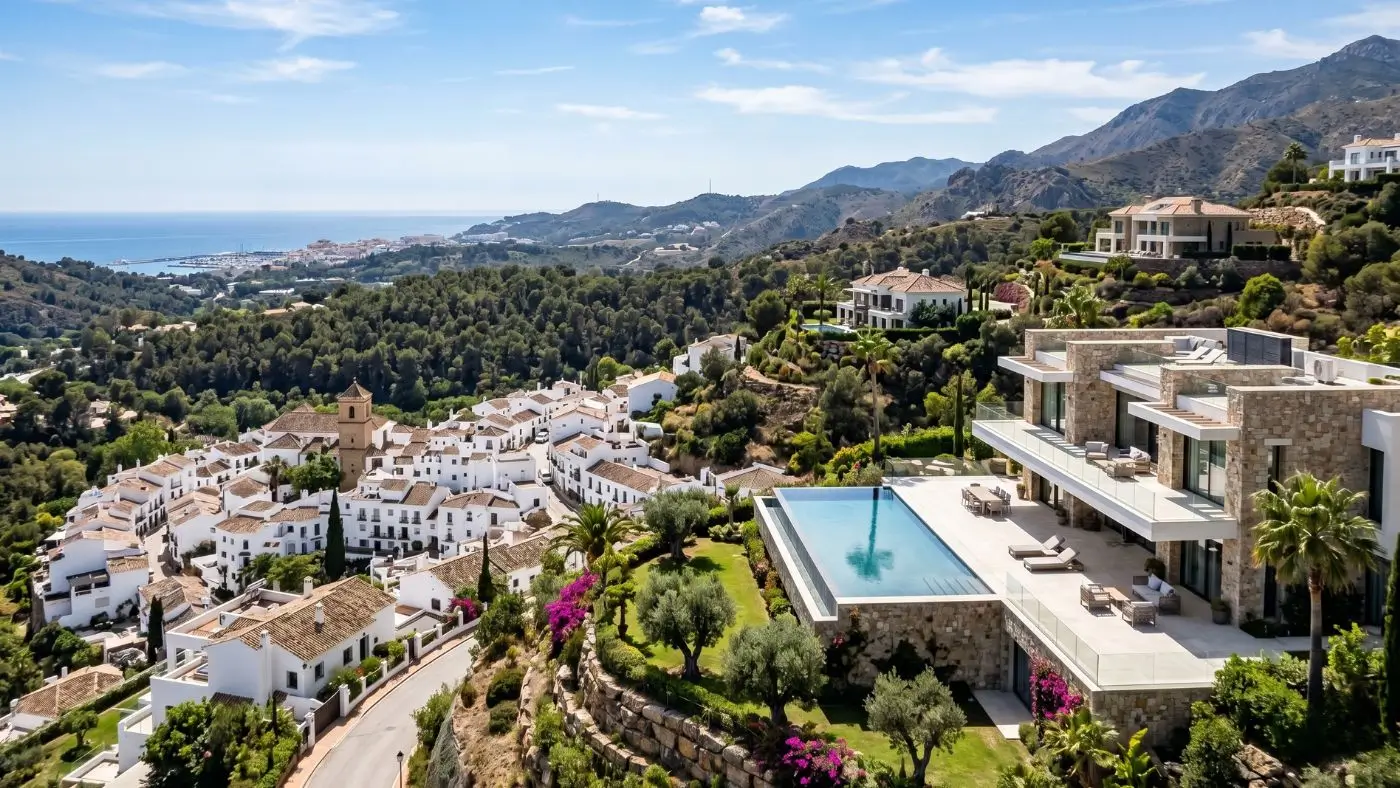
Benahavis sits 7 kilometres inland from the Costa del Sol coastline, tucked into the foothills of the Sierra de las Nieves. While most visitors rush past towards Marbella’s beaches, this white-washed pueblo holds something different: 18 Michelin-recommended restaurants, hiking trails that connect three rivers, and property values that rose 12% in 2024 according to Tinsa’s latest market report.
The village has earned its nickname “the dining room of the Costa del Sol” through decades of culinary tradition, but there’s more substance here than just good paella. Population: 8,500 permanent residents, swelling to 25,000+ during summer months.
Hiking Benahavis: Three Rivers, Dozens of Routes
The Guadalmina, Guadaiza, and Guadalmansa rivers converge near Benahavis, creating a natural corridor of pine forest and limestone gorges. Unlike coastal paths packed with August tourists, these trails stay relatively empty even in peak season.
Río Guadalmina Trail (5.2 km, moderate difficulty) follows the river from the CC La Trocha shopping centre up to the old flour mill ruins. The path crosses the water 6 times—wear proper hiking boots, not trainers. Early morning works best; by 11 AM the valley heats up considerably. Total elevation gain: 340 metres. You’ll pass wild fig trees and occasional mountain goats. The mill itself dates to 1726, though only foundation stones remain.
Jarapalos Route (8.7 km loop, challenging) climbs above the village towards Monte Mayor. This path delivers panoramic views across the coast from Estepona to Gibraltar. On clear days (roughly 280 days per year here), you can see Morocco’s Rif Mountains. The trail includes two steep sections with loose scree—trekking poles help. Local hikers start before 8 AM to avoid midday sun. Water sources: none after leaving the village, so carry 1.5 litres minimum per person.
Charco de Casares Waterfall (3 km return, easy-moderate) takes you to a natural pool where locals swim June through September. The waterfall runs strongest March to May after winter rains; by August it reduces to a trickle. Park near Venta El Tunel restaurant and follow the marked path downstream. The pool reaches 2 metres deep in the centre. Weekends get crowded—weekday mornings offer solitude.
↗ hiking and outdoor activities in Benahavis area
The Restaurant Scene: Beyond Tourist Menus
Benahavis holds 18 restaurants featured in Michelin or Repsol guides, an unusual concentration for a village this size. This didn’t happen accidentally. In the 1960s, local families opened ventas (roadside inns) serving game stew and rabbit to workers building the coastal developments. That tradition evolved into serious gastronomy.
Los Abanicos (Calle Malaga 6) serves traditional Andalusian cuisine with zero pretension. Their venison stew includes meat from Sierra de Grazalema, slow-cooked for 4 hours. Lunch menu: €22 for three courses. Book 48 hours ahead for weekend dinners—they only seat 35 people.
Amanhavis Hotel Restaurant brings more contemporary style with local ingredients. Their tasting menu changes monthly based on what’s available at Málaga’s Atarazanas market. The rooftop terrace overlooks the valley and serves until 23:00 May through October.
Walk the Ruta Gastronómica (marked with blue ceramic tiles) connecting 12 restaurants through the old quarter’s narrow streets. The full circuit covers 1.8 km with multiple stops. Most establishments offer tapas 13:00-16:00 and 20:00-23:00.
What to Do in Benahavis Beyond Dining and Hiking
Museo Arqueológico (Plaza de la Constitución) displays Roman artifacts from nearby Villa Matanza site and Moorish pottery fragments. Entry: €3, closed Mondays. The collection spans 2,000 years of local history in two small rooms—allocate 30 minutes.
Montemayor Castle ruins crown the hill above town. Built in the 10th century during Moorish rule, destroyed in 1485 during the Christian conquest. The climb (20 minutes from Plaza España) gets steep towards the top. What remains: partial walls and the tower base. The site offers 360-degree views and informative panels about medieval fortress construction.
Santo Cristo Chapel (17th century) sits in the village centre at Plaza de la Iglesia. White-washed interior with baroque altar. Usually open 9:00-13:00 for quiet visits. The adjacent square works well for morning coffee while watching village life unfold.
La Zagaleta (private estate) sprawls across 900 hectares north of Benahavis. You can’t enter without resident permission, but the perimeter roads show glimpses of serious wealth: security gates, manicured forests, and occasional celebrity sightings. Properties here start at €4 million and reach €35 million for new-build villas.
Golf Access: 12 Courses Within 15 Minutes
Benahavis sits equidistant from multiple championship courses. Los Arqueros (designed by Severiano Ballesteros, 5 km away) challenges with elevation changes and narrow fairways. La Quinta (7 km) offers three nine-hole loops through cork oak forest. Marbella Club Golf Resort (6 km) carved into hillside with significant elevation play.
Most courses open year-round with temporary greens during January-February overseeding. Green fees range €80-180 depending on season. The microclimate here runs 2-3 degrees cooler than the coast, making summer rounds more comfortable than beachside courses.
▸ Explore properties near Benahavis golf courses
Market Day and Local Shopping
Wednesday morning transforms Plaza de la Constitución into the weekly market. Vendors arrive at 8:00 selling produce from Coín valley farms, Ronda cheeses, olives from family groves, and leather goods. The market runs until 14:00. Quality varies—look for stalls with farm names displayed, not generic “productos naturales” signs.
Calle Málaga holds a dozen small shops: ceramics from Málaga workshops, local honey (the hills produce excellent rosemary and orange blossom varieties), hiking gear, and butchers selling Iberian pork products. Shops generally open 10:00-14:00 and 17:30-20:30, closed Sundays.
Day Trip Logistics: Is Benahavis Worth It?
Driving from Marbella: 15 minutes via A-7 and A-397. Parking fills quickly in summer—arrive before 11:00 or park at CC La Trocha (free) and walk 600 metres uphill into the village centre.
From Estepona: 20 minutes through Cancelada on A-397. This route climbs steadily with hairpin bends—not suitable for nervous drivers.
Public transport: Bus M-713 runs from Marbella bus station (4 daily departures, €2.60 one way, 25-minute journey). Return buses limited after 19:00—check schedule beforehand or risk a €30-40 taxi back.
A day trip works, but the village reveals itself better over 2-3 days. Morning hikes, long lunches, evening strolls create a different rhythm than coastal resorts. The area attracts visitors seeking property precisely because it offers substance beyond beach clubs and marinas.
Seasonal Considerations for Things to Do in Benahavis
Spring (March-May): Rivers run full, wildflowers cover hillsides, temperatures ideal for hiking (16-22°C). The Fiesta de San Marcos (April 25) fills streets with food stalls and flamenco performances.
Summer (June-August): Hot days (28-35°C) push activities to early morning or evening. Restaurants busiest; booking essential. The Feria de Benahavis (early August) runs three days with fairground, outdoor dining, and live music until 3:00 AM.
Autumn (September-November): Crowds thin, prices drop slightly, weather stays warm (20-26°C). Hiking conditions excellent. Restaurants quieter—easier to secure tables.
Winter (December-February): Mild days (12-16°C), occasional rain. Some restaurants close Mondays/Tuesdays. Mountain views spectacular after rain clears the air. The village takes on a local character without tourist overlay.
Living Here vs. Visiting: What Changes
Property buyers discover Benahavis functions as a real Spanish village that happens to attract tourists, rather than a tourist destination pretending to be a village. Schools operate in Spanish, the medical centre (Centro de Salud) serves residents properly, and municipal services work reliably.
The municipality covers 145 km² from the coast at San Pedro de Alcántara up into Sierra Bermeja mountains. This geography creates microclimates—coastal zones stay warmer, while areas above 300 metres elevation get notably cooler. Properties in Los Arqueros or Monte Halcones sit at 250-400 metres altitude, meaning 3-5 degrees cooler than Marbella centre in summer.
↗ Benahavis property for sale
Transport matters for residents. Without a car, you’re limited to the M-713 bus schedule. Most expats settling here maintain vehicles. The AP-7 toll motorway runs 7 km south, connecting to Málaga Airport (55 km, 45-minute drive) and Gibraltar (70 km).
International schools cluster around San Pedro and Marbella, 10-15 minutes’ drive. Aloha College, Laude San Pedro, and Swans International School all draw Benahavis residents.
The Property Context: Why This Matters
Understanding what to do in Benahavis connects directly to why people buy here rather than on the coast. The village offers:
- Authenticity: actual Spanish residents, functioning local economy beyond real estate
- Access: 15 minutes to beaches, Puerto Banús, international schools, hospitals
- Environment: green zone with hiking, cleaner air, natural surroundings
- Investment stability: property values held stronger than coastal areas during 2008-2013 correction
Properties range from €180,000 for village apartments to €500,000-2 million for villas in developments like La Heredia, Monte Mayor, or Capanes Sur. New construction continues but at controlled pace—the municipality maintains strict planning rules preventing over-development.
▸ Request our Benahavis area property guide
Buyers viewing Benahavis properties should allocate 4-5 hours minimum: 1 hour exploring the village itself, 2-3 hours viewing properties in different developments, time for lunch at a local restaurant. This reveals whether the lifestyle suits you better than theory suggests.
Practical Details Before You Visit
Best time to arrive: Weekday mornings (Tuesday-Thursday, 9:30-11:00) when the village operates normally without weekend crowds.
Where to park: Paid parking (€1.50/hour) on Avenida Andalucía. Free parking at CC La Trocha shopping centre or Polideportivo (sports centre), both requiring 10-minute walks into the old quarter.
What to bring: Comfortable walking shoes (cobblestone streets), sun protection (limited shade), water bottle. Card payments accepted most places but carry €40-50 cash for market stalls and smaller establishments.
Local services: Tourist office at Calle Málaga s/n (open 10:00-14:00, 17:00-19:00, closed Sundays). Farmacia (pharmacy) at Plaza de España. Public restrooms in Plaza de la Constitución.
Mobile coverage: All Spanish carriers work reliably. Free WiFi in most restaurants and cafés.
Connecting to Coastal Activities
Benahavis works as a base for coastal access without coastal living. Puerto Banús sits 12 minutes away—beach clubs, shopping, nightlife. Estepona beaches (18 minutes) offer 21 km of coastline with beach bars every 500 metres. San Pedro de Alcántara (8 minutes) provides supermarkets, services, and a broad sandy beach less crowded than Marbella’s.
This positioning attracts families wanting swimming pools and beach access without living in apartment blocks facing the sea. It suits semi-retired couples seeking active lifestyles with culture. Young professionals working remotely choose Benahavis for lower housing costs than Golden Mile while maintaining reasonable access to Málaga (for airport connections) and coastal social life.
The village doesn’t suit everyone. If your ideal involves walking to beach clubs daily, living in bustling urban environments, or relying on extensive public transport, coastal locations work better. But for those wanting Spanish village character, outdoor activities, strong restaurant culture, and property that holds value, Benahavis delivers what it promises.
Frequently Asked Questions
Is Benahavis worth visiting for a day trip from Marbella?
Yes, particularly if you combine 2-3 activities: a morning hike on Rio Guadalmina trail, lunch at a traditional restaurant like Los Abanicos, and exploring the old quarter. The village offers genuine substance beyond a quick photo stop—allocate minimum 4-5 hours to experience it properly rather than just tick it off a list.
What is there to do in Benahavis beyond the beach?
Benahavis sits inland without beaches, which defines its character. Primary activities include hiking three river valleys with trails from 3-9 km, dining at 18 Michelin-recommended restaurants, visiting Montemayor Castle ruins, and accessing 12 golf courses within 15 minutes. The village functions as a mountain alternative to beach resorts, not a beach destination itself.
What are the best hiking trails near Benahavis Spain?
Rio Guadalmina Trail (5.2 km, moderate) offers the best introduction with river crossings and mill ruins. Jarapalos Route (8.7 km loop, challenging) delivers coastal views from 550 metres elevation. Charco de Casares (3 km return, easy-moderate) leads to a swimming hole popular with locals. All three trails stay relatively empty compared to coastal paths, even during summer peak season.
How does Benahavis compare to purely coastal villages like Estepona or Marbella?
Benahavis maintains authentic Spanish village character—local residents outnumber tourists, shops serve actual needs beyond souvenirs, and life continues outside tourism season. It sits 300-400 metres elevation, making it 3-5 degrees cooler than the coast in summer. Property costs run 20-30% lower than equivalent quality in Marbella’s Golden Mile, while staying just 15 minutes’ drive from beaches and services.
Can you visit Benahavis without a car?
Technically yes via bus M-713 from Marbella (4 daily departures), but limited schedules restrict flexibility. The village itself covers a small area walkable in 30 minutes, but reaching hiking trailheads, multiple restaurants, or nearby developments requires transport. Most property owners and regular visitors maintain vehicles—the area suits car-dependent lifestyles better than those relying on public transport.
▸ Download our complete Benahavis lifestyle and property guide
The village rewards curiosity over checklist tourism. Walk the side streets beyond Plaza de la Constitución. Talk to restaurant owners about their suppliers. Take the less-marked trails. Benahavis reveals itself to people who spend time rather than those rushing through.
For property buyers, this exploration process matters. You’re not just purchasing a villa or apartment—you’re choosing a lifestyle, a community, and a specific relationship with the Costa del Sol. Understanding what actually happens in Benahavis, how people spend their days, and what the environment offers helps make that decision with clarity rather than estate agent promises.
The 12% property value increase in 2024 reflects growing recognition that authentic villages with substance hold value better than purely resort-driven locations. People discover Benahavis, experience its particular character, and choose to stay. That pattern drives the local market more than speculative investment.
Whether you visit for a day, a week, or eventually decide to buy property here, approach Benahavis as what it actually is: a functioning Spanish mountain village that happens to sit near wealthy coastal areas, not a resort pretending to be a village. That distinction matters.
